Some new trains::
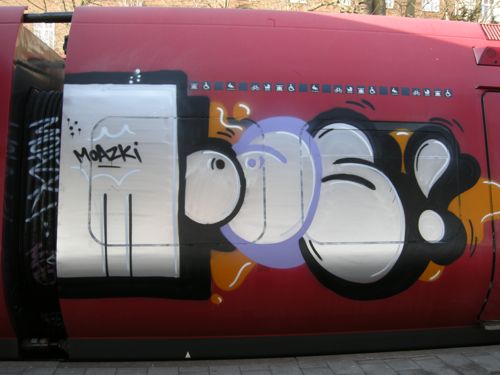

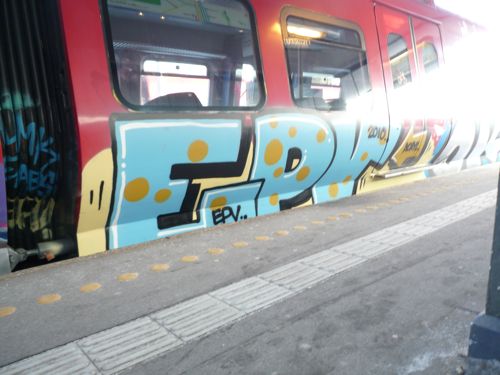
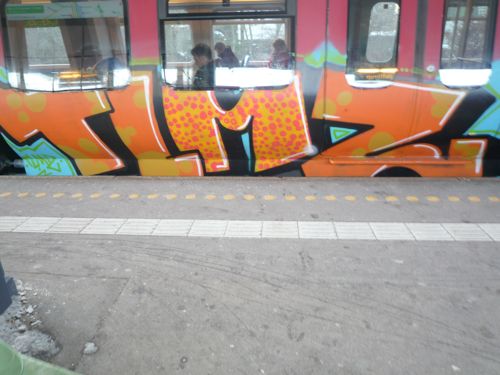
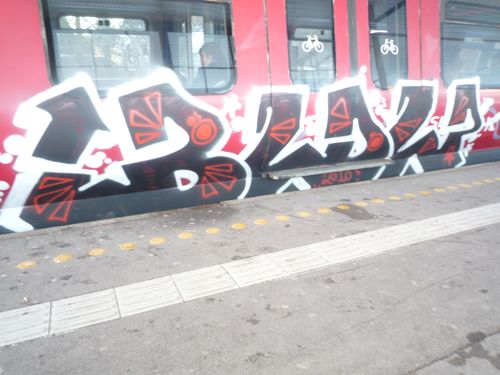
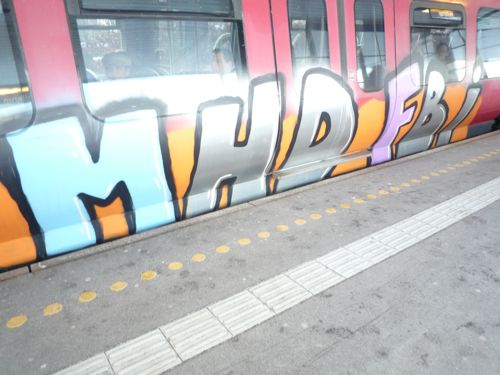
Some new trains::
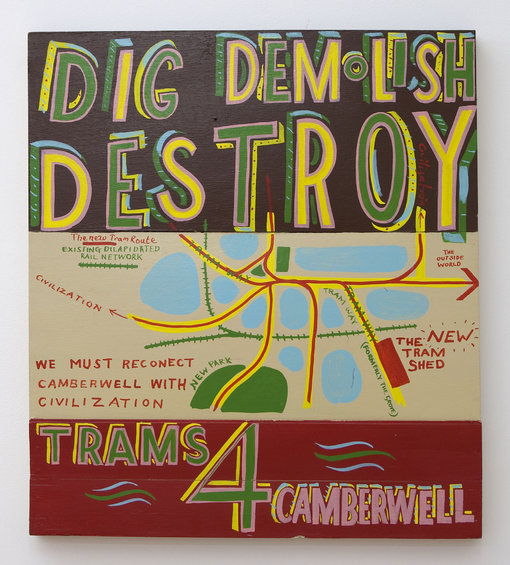
This is a British election year and London based artists Bob and Roberta Smith want to be involved and are keen to have their say!
Bob and Roberta Smith’s third solo exhibition at the gallery, provides them with the perfect platform to get YOU involved. During the course of the show Bob and Roberta Smith are inviting everyone to an event held each Saturday during March at Hales Gallery. They are offering the opportunity to be part of a mass letter writing to politicians on a wide range of subjects as diverse as:
Was it right for the Mayor’s office to cut funding for the anti-racism festival RISE
What is Hilary Benn doing to protect the environment post-Copenhagen?
And asking Ed Vaizey (the Conservative shadow Minister for Culture) why anyone involved in the arts would vote Conservative given their views over the funding of The Arts Council?
Where art movements like the Fluxus or art schools were once the bastions of left-wing thinking and direct political engagement, there now seems to be a mood of indifference. The Smiths are in part nostalgic for the past and on the other hand realistic about what an artist’s involvement with politics can achieve. They have created a show that delves into the current apathy surrounding politics of the ‘middle-ground’ and the elaborate channels that politicians have created to ‘try and get things done’. With their familiar language of signs and placards they attack scepticism in favour of a bright new world where campaigning can change the cultural, natural and creative landscape. With this exhibition, Bob and Roberta Smith are attempting to herald in a new era of political activity.
This is not the first time that the Smiths have used the democratic process and popular politics as subject matter, in fact the artists have returned to it many times. Pictured in their book Make Your Own Damn Art, is a small badge made by a youthful Bob Smith. The year was 1979 and Britain was on the brink of the Thatcher era. The text reads, Tories help the Rich, Labour helps the Rest. It was not meant as an artwork but reflected a common art school sentiment of the time. In an installation entitled The Government at Cell Projects, London (2003) Bob and Roberta Smith played with national disappointment as the first cracks in New Labour’s shiny exterior became visible with a selection of bluntly worded signs poking fun at the then Cabinet. In 2004, as part of a public art project, Bob Smith stood for Mayor of Folkestone, Kent, asking people to Vote Bob Smith for more Art. More recently during Altermodern (curated by Nicolas Bourriaud in 2009) at Tate Britain the Smiths presented a series of signs reflecting the optimism of the first black President of America alongside heaps of street debris.
What all of these projects share is a distrust of a fallible political process alongside a deep-seated belief that against all of the odds, things could get better…….(if only by accident!)
Bob and Roberta Smith live and work in London. Their work is currently being shown as part of Niet Normaal at the Beurs van Berlage, Amsterdam and their solo show This Artist is Deeply Dangerous at Beaconsfield, London runs until 21st Feb 2010. Bob and Roberta Smith are also artists in residence at the New Art Gallery Walsall working with the Epstein archive resulting in a major exhibition The Life of the Mind at the museum in 2011. Bob Smith is currently a Trustee of the Tate. The show also includes three new sculptures that have been made in collaboration with Tim Fidall who recently worked with Bob and Roberta Smith on their 2008 Tate Christmas tree.
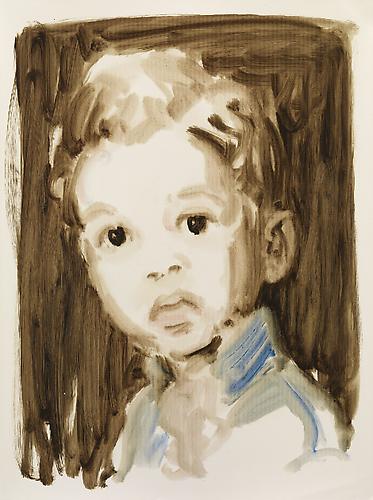
Perry Rubenstein Gallery is pleased to announce an exhibition of new paintings by Annie Kevans at 527 West 23rd Street. The exhibition will be comprised of some 30 new works, all painted within the past year.
The title of the exhibition is Manumission, a term with a complex history. Manumission refers specifically to a slave owner’s ability or discretion to free a slave. That power, in the hands of the men that wielded it, is the same power exercised by the philanderer in the choosing and the dismissal of his mistress.
The paintings in this exhibition are all portraits; most depict the illegitimate children of various Presidents of the United States, others their mistresses. Many of these figures, such as Sally Hemings and Grace Kelly, are well known. Others are considerably less so, and even less so are their children. Through this series of portraits, Kevans explores the representation of power, the lack thereof, and its manipulation in the hands of those who posses it. Having an affinity for the marginalized, Kevans paints figures overlooked, exploited, or objectified within the context of history or contemporary culture, imbuing her subjects with a tangible humanity and sensuality.
Kevans’ wide-eyed rendition of William Beverly Hemings conveys an innocence that arrests its viewer, yet exposes dark themes that belie its surface. William, the son of Sally Hemings, is believed to have been fathered by Thomas Jefferson. With William’s startled and seemingly innocuous gaze, Kevans alludes to the injustice and hypocrisy perpetrated by one of the most revered figures in American History.
Kevans looks to historical texts, illustrations, or photographs for source material, when possible. Yet as is often the case with figures that have been all but forgotten or perhaps deliberately omitted from history, she visualizes characters by borrowing features from life models. In effect, lending a face to the faceless and casting light on issues that are uncomfortable and thus ignored.
Implementing loose brushwork and layers of translucent oil paint, Kevans paints her subjects in a manner so elegant and subtle that she allows the character of both the medium and the subject to speak for themselves. Given their rich individual histories, the manifestations of these characters are as incredible as the feat of their rendering.
The exhibition of Annie Kevans’ paintings opens one day before the celebration of Presidents’ Day Weekend, February 11th, 2010.
British artist Annie Kevans was born in Cannes, France, and lives and works in London. Past solo exhibitions include Vamps and Innocents, Galleria Antonio Ferrara, Vienna (2007); Swans, 319 Portobello Road, London (2007); and Girls, Studio 1.1, London. Kevans’ work has been included in numerous group exhibitions, notably at the Galerie Karin Sachs, Munich (2008, 2007); Galleria Antonio Ferrara, Italy (2007, 2006); Contemporary Art Projects, London (2007) and will be included in the much-anticipated Power of Paper at Saatchi Gallery, London (Dates TBA). Kevans was a finalist for both the Jerwood Drawing Prize (2006) and Women Of The Future award (2007) in the United Kingdom.
Some new & some old, but still rocking:::
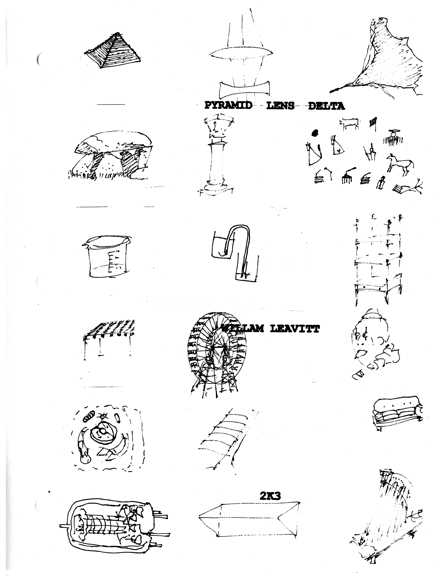
The Jancar Jones Gallery is pleased to announce an exhibit of the work of Los Angeles-based artist William Leavitt titled A Show of Cards.
The show will include over 300 ink drawings on index cards. These cards function, for Leavitt, as a bank from which individual images were selected at random to generate a narrative. Subsequently they are incorporated into the text for Leavitt’s play “Pyramid Lens Delta”, thus titled by the first three sequential cards. The script for the play will also be on view.
Leavitt has used similar chance processes to compose elements of the script for the theater piece “The Radio” (2002) and in his photo series “Random Selection” (1969), in which he photographed arrangements of arbitrarily selected objects together. A collection of these photographs was included in the final issue of Landslide, a satirical art journal published by Leavitt and artist Bas Jan Ader in 1969/70.
William Leavitt received his MFA from Claremont Graduate School, Claremont, CA in 1967. He has been working and exhibiting in Los Angeles since the early 1970s. Recent exhibitions include Molecules and Buildings at the Margo Leavin Gallery in Los Angeles. An exhibit of three new prints opens at Cirrus Gallery, Los Angeles on February 6, 2010. In November 2010, the Museum of Contemporary Art, Los Angeles will open Leavitt’s first solo museum exhibition and retrospective.
Jancar Jones
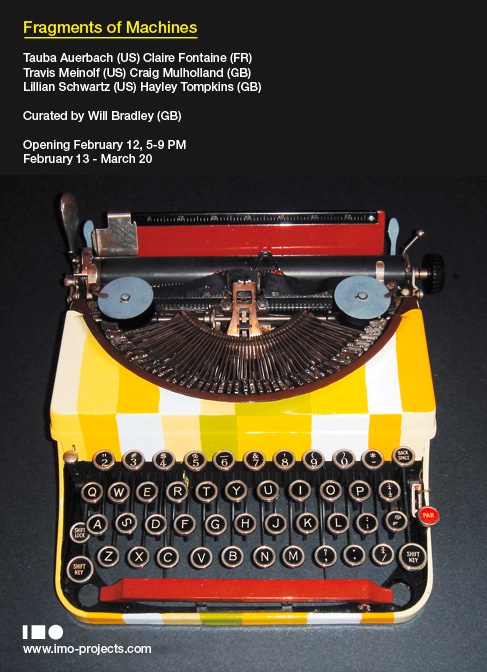
Fragments of Machines is a group exhibition of painting, sculpture, textiles and video work by five contemporary artists based in Glasgow, Berlin, New York and Paris, alongside the first screening in Denmark of Lillian Schwartz’s seminal computer-animated 16mm film ‘Googolplex’, made in 1972.
The works on show are diverse but loosely connected by an attempt to question, subvert or undo the relationships between particular technologies and the forms of life they were designed to promote. From the nineteenth-century origins of the digital computer in the industrial revolution to the twenty-first century calculations of virtual capital and online social networking, technology has developed both to serve particular conceptions of social relations and to determine social interactions. In modest, and mostly low-tech ways, the works in this show rebel against the forms of life that industrial technology is employed to produce. Each in its own way proposes a counter move that might critique existing mechanisms or suggest an altered value-system.
Tauba Auerbach’s fundamental concern is with representation and meaning, the limits and ambiguities of language and their relation to perceived reality. One part of her practice develops twentieth century structuralist games with language, typography and technology to explore the potential of apparent restrictions, contradictions and malfunctions in the process of communication. Tauba Auerbach lives and works in New York.
Claire Fontaine is a collaboration, a self-described ‘Ready-made artist’. She ‘experiments with collective protocols of production, détournements, and the production of various devices for the sharing of intellectual and private property.’ Claire Fontaine is based in Paris.
Travis Meinolf’s practice combines art, craft, education and activism, but is based around the production of hand-woven textiles. He writes: ‘I am engaged in a personal industrial revolution … to present productive labor as an engaging, satisfying endeavor, whose products could be shared freely within a community to serve the needs of all of its members.’ Travis Meinolf lives and works in Berlin.
Craig Mulholland trained as a painter but his practice encompasses sculpture, installation and film making, addressing themes of alienation and complicity in the contemporary cultural economy. ‘The dominant concerns within Mulholland’s recent work have centred on Foucauldian theories of power – “the political dream of the plague […] the penetration of regulation into even the smallest details of everyday life”.’ Mulholland lives and works in Glasgow.
Lillian Schwartz is best known for her pioneering work in computer animation. ‘Googolplex (1972) utilised Lillian Schwartz and Kenneth Knowlton’s self developed graphical programming language EXPLOR to build a kinetic patchwork of binary grids pulsing to the sound of African tribal chant. The work, a result of research at BELL laboratories into the perception of sound and images, exists somewhere between a psychotic cellular automaton and stroboscopic Bridget Riley.’ Lillian Schwartz is based in New York.
Hayley Tompkins makes objects of the things you would never consider to represent, and yet, there they are …Elsewhere, she has called this quality a kind of hypothetical relation, in that her paintings and objects appear to exist only ‘as if’, as an echo of something if only one could represent it … her ‘Metabuilts’ are somewhere between dream, reconstruction and product … fragile and sometimes so forsaken as to half-erase themselves from existence.’ Hayley Tompkins lives and works in Glasgow.
Will Bradley is a curator and art critic based in Oslo. In exhibitions and publications he has among other things been dealing with art in relation to social change, self-organisaiton, counter-economic strategies and technology. In 1998 he co-founded the gallery The Modern Institute, Glasgow.