Tag: 2010
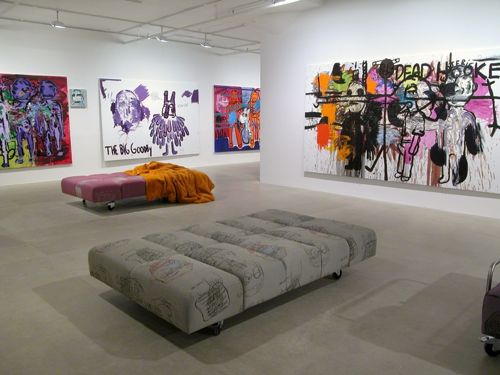
Yoshitomo Nara //
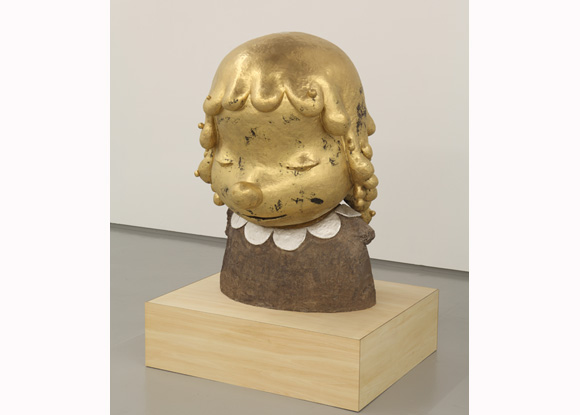
Calum Stirling /// HYPOBARIC EMPYR

Spring Fling, the Dumfries & Galloway artists’ open studios event, has commissioned Scottish artist Calum Stirling to create a new installation work. This will be open to the public for the duration of the May bank holiday weekend at Craigieburn, a Nepalese-themed garden outside Moffat, in Scotland.
Stirling is a multi-disciplinary artist based in Glasgow. For the commission, he has created a new installation titled Hypobaric Empyr, which combines elements of architecture, sound and alchemy and responds directly with the unusual, culturally and geographically diverse, landscape of the garden. Stirling is a multi-disciplinary artist based in Glasgow. For the commission, he has created a new installation titled Hypobaric Empyr, which combines elements of architecture, sound and alchemy and responds directly with the unusual, culturally and geographically diverse, landscape of the garden.
Throughout the five-acre garden Stirling will install a series of architectural scale sculptures that define the core of the installation. Part folly, theatrical set and mystical retreat, in combination their intention is to generate a complimentary fictional narrative and alternative navigation of the garden. The theme of the installation comes, in part, from the work of German architectural theorist Bruno Taut – in particular his inspirational book Alpine Architecture. Written in the immediate aftermath of WWI, in it he projects a utopian conversion of the world beginning with an architectural reworking of the Alps. Taut’s Modernist and Expressionist values were complimented not only by an interest in mountain culture but also by an interest in Buddhist philosophy. Stirling has taken this connection back to Dawa Sherpa, Craigieburn’s head gardener. Dawa’s passion for Nepali plants and his previous occupation as a sherpa guide and successful Everest summiteer is evident throughout the garden.
Calum Stirling studied sculpture at Duncan of Jordanstone College of Art in Dundee (1983-87). In recent works Stirling has focused on exploring illusion, perception and chance occurrence in relation to both static and mobile sculptural form and space. He often makes installations devised for specific locations, such as Rostra Plaza his large-scale expanded cinema installation devised for the Mitchell Library at Glasgow International Festival of Visual Art 2008 and the project Landstylus devised for Makrolab to translate the topography of the Scottish Highlands into sound. Recent shows and projects include The Dwelling at the Australian Centre for Contemporary Art (ACCA) in Melbourne and a major public artwork for the New Victoria Hospital in Glasgow. Forthcoming projects include Mediations Biennale 2010 in Poznan Poland.
RICHARD COLMAN
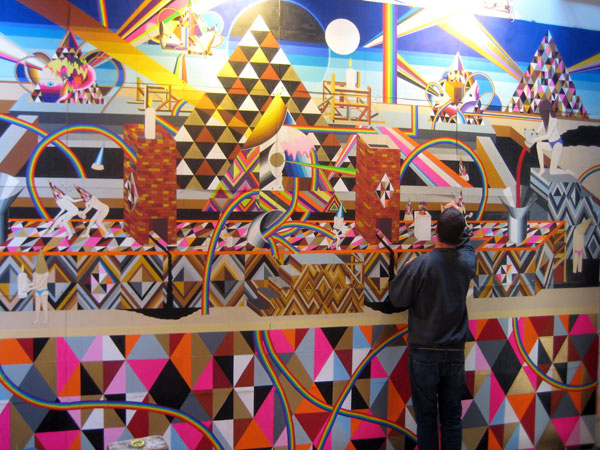
LOS ANGELES – Opening May 22, New Image Art Gallery presents “Keep Out the Light,” a solo exhibition that features new paintings, sculpture and site-specific installations by Richard Colman. “Keep Out the Light” marks Colman’s first solo exhibition in Los Angeles since 2007.
In this most recent body of work, Colman shows the struggles of the architect working “behind the scenes” of the elaborate; both beautiful and claustrophobic among landscapes and artifacts. Richard’s work demonstrates a unique language drawing on the intricacies of an Indian Miniature, to the antiquity of the more abstract and symbolic nature of Byzantine art. Colman’s patterns have the repetition and geometry associated with Islamic tiles and mosaics. Narratives depict day-glo orgies, fusing the sinister with the comical. A pantheon of internalized imagery and shared iconography comes into play in the shape of occult symbols, silhouettes, and rainbow sprays of color, piles of viscera, in a concoction of violence and ecstasy.
The subjects of his paintings-from headless bears to naked men-are presented in a theatrical way, like actors in a play, standing in formation. The work captures the feeling of being frozen on stage, anticipating what will come next and never quite finding out.
The title of the show, “Keep Out the Light,” references the density of Colman’s work, as well as his obsessive work habits, serving as a sort of escape for the artist. The works in this new exhibition exhibit the strength of obsessive patterning and imagery to drive away the delusions of everyday life.
Colman will be constructing a space within the gallery that will both highlight the work and invite viewers to step into the art and explore and experience the landscape of “Keep Out the Light”.
About Richard Colman
Colman was born in 1976 and grew up in Bethesda, Maryland, a suburb of Washington, D.C. Colman graduated from the School of the Museum of Fine Arts, Boston, Massachusetts, in 2002. He has exhibited extensively throughout the world in solo and group exhibitions including Krets, Malmo Sweeden, V1 Gallery, Copenhagen, Denmark, Merry Karnowsky Gallery, Los Angeles, Union Gallery, London, UK and ARKEN Museum Of Modern Art, Denmark. In 2006, Gingko Press released a book cataloging his work titled “I Was Just Leaving.” Colman currently lives and works in San Francisco, California. www.richardcolmanart.com
About New Image Art Gallery
Marsea Goldberg, founder and director of New Image Art, started the gallery in 1994 in her 10 by 10 design studio. Since then, the gallery has grown to attract a global cult following, grabbing the interest of art lovers and collectors worldwide. Renowned for her discriminating eye and solid curatorial skills, New Image Art Gallery continues to show the works of established and emerging artists coming out of the street, skate, fine art and surf scenes. Over the years, the gallery has launched or mobilized the careers of Shepard Fairey, Ed Templeton, Jo Jackson, Chris Johanson, Rich Jacobs, Rebecca Westcott, Neckface, Cleon Peterson, Megan Whitmarsh, Faile, Tauba Auerbach, Matt Leines, the Date Farmers, Judith Supine, and Bäst, just to name a few.
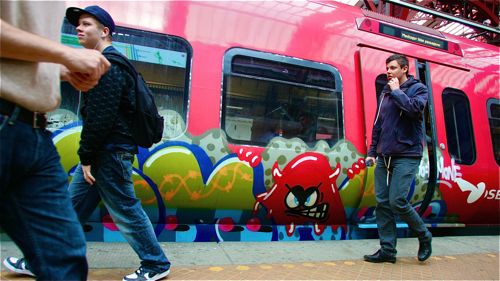
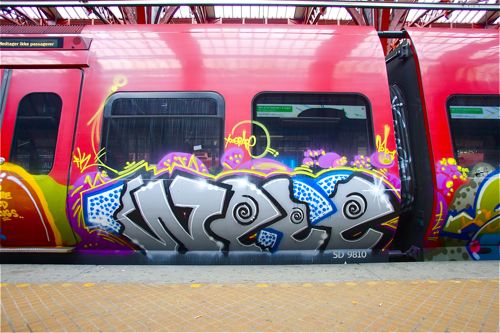
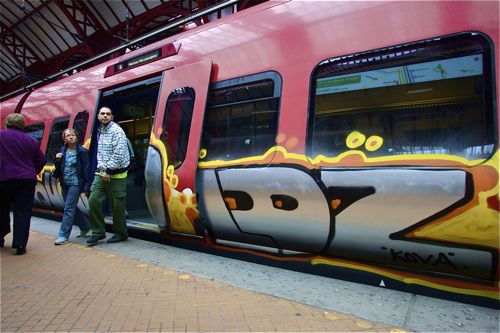
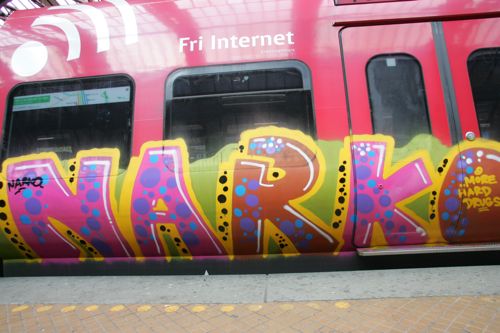
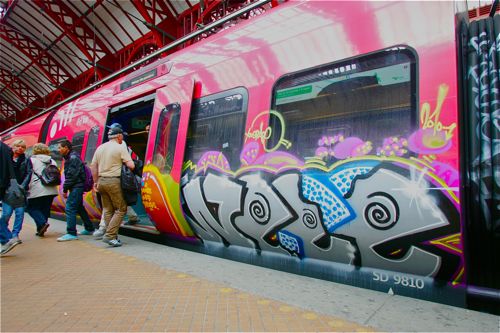
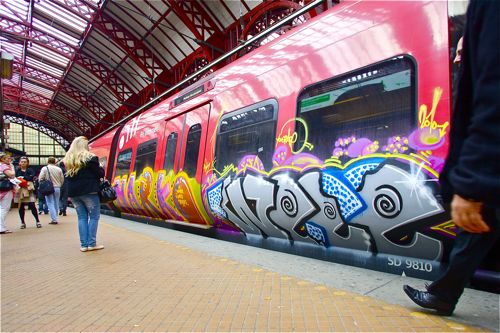
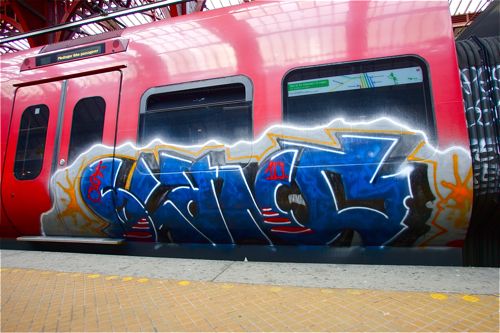
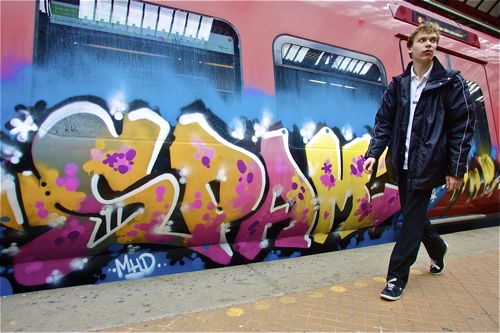
Copenhagen Graffiti (S-Trains) //
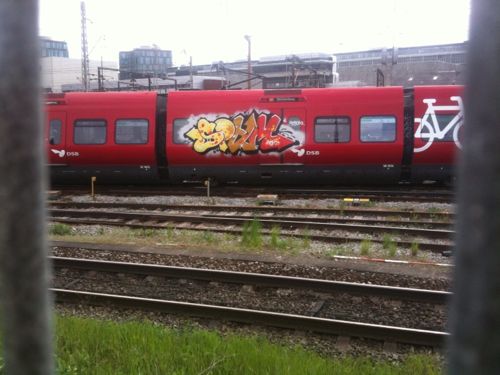
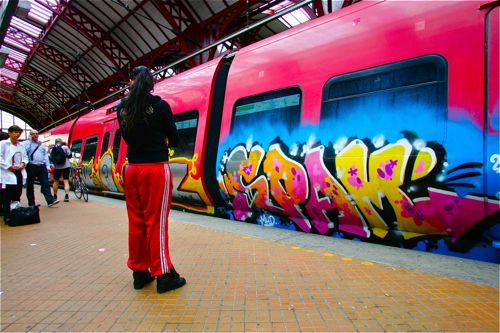
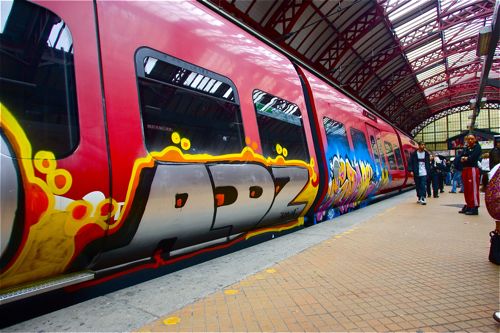
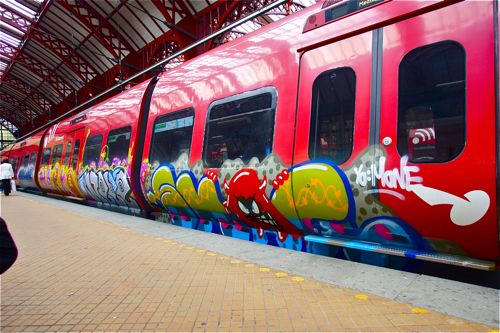
Artist web //
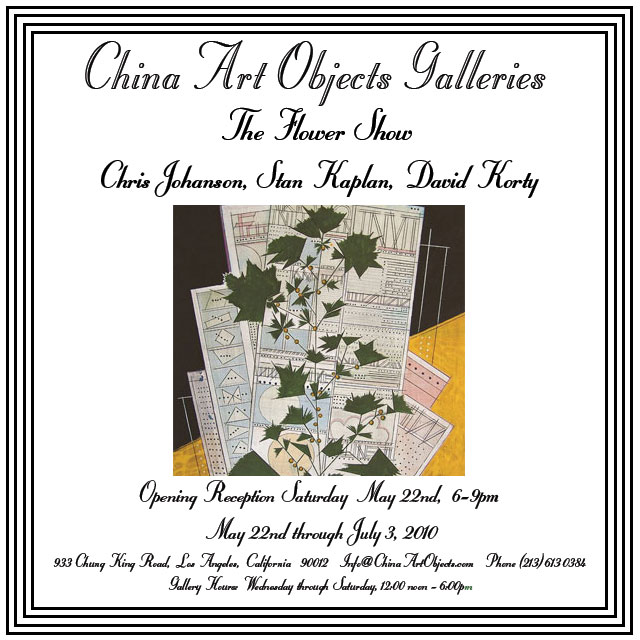
The Flower Show//
MEANING OF VOID
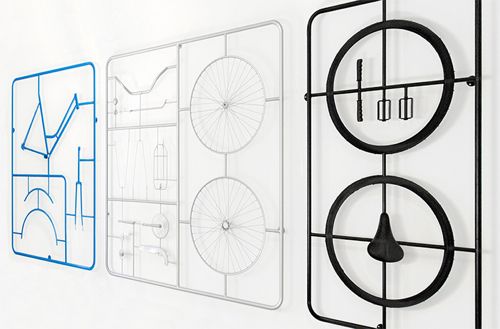
Christoffer Egelund Gallery proudly presents the group exhibition ”Meaning of Void”, showing works by artists; Michael Johansson (SE), Pind (DK), Thomas Fleron (DK), Anna Fro Vodder (DK), Ulrik Heltoft (DK) og Melou Vanggaard (DK). Through various installational approaches, the represented artists explore the void and its’ meaning – some avoid the empty space others applaud it. The works move between the empty and the compact space, between order and chaos, between significance and insignificance.
Despite the artists’ point of departure in different media such as installation, sculpture, photography, drawing and painting, the six artists share a strong fascination with exploring new depths, patterns and meanings in one type of detail. In the same way as the collector, the six artists enjoy to carefully select a particular object among a jumble of objects, then emphasizing and reinforcing their significance through accumulation and repetition.
Michael Johansson (b. 1975) is fascinated by repetition and likes to find similar items. He selects, sorts and orders the collected objects in dense compilations. His compact sculptures indicate a ‘Horror Vacui’, a fear of the empty space. Michael Johansson was educated at Malmö Art Academy in 2005 and has several solo exhibitions behind him and he is for instance represented at Malmö Art Museum. Pind (b. 1975) removes seemingly useless – however for him significant – objects from their context and ascribes them new meaning and value. Pind graduated from the Royal Danish Academy of Fine Arts in 2006. He has had a solo exhibition at Overgaden and participated in several group shows in Copenhagen. Thomas Fleron (b.1972) draws objects whose meaning is not immediately readable. But the stories behind the objects reveal that they refer to political and historical rituals. Thomas Fleron graduated from the Royal Danish Academy of Fine Arts in 200 0. Anna Fro Vodder (1974) explores origin and valuation in her paintings. The void shows in the form of abstraction and unpainted arias. In her paintings the empty space becomes the element, that gives everything else meaning. Anna Fro Vodder graduated from the Royal Danish Academy of Fine Arts in 2000 and she is represented at Horsens Kunstmuseum. Ulrik Heltoft (b. 1973) explores space as a ‘locus’ for anxiety. His photos show how claustrophobia, fear and nightmares relate to the directionless space. Ulrik Heltoft graduated from the Royal Danish Academy of Fine Arts and MFA Yale University in 2001. He has had solo exhibitions at Raucci e Santa Maria in Naples and Willfried Lenz in Rotterdam. Melou Vanggaard (b. 1969) mixes the figurative and the abstract in both her paintings and sculptures. In her works the void becomes a balancing force to the figurative and compact, thus creating a resting place in a space otherwise heavily saturated with meaning. Me lou Vanggaard graduated from the Royal Danish Academy of Fine Arts in 2001.
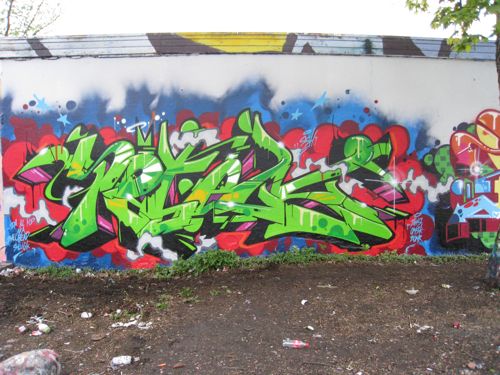
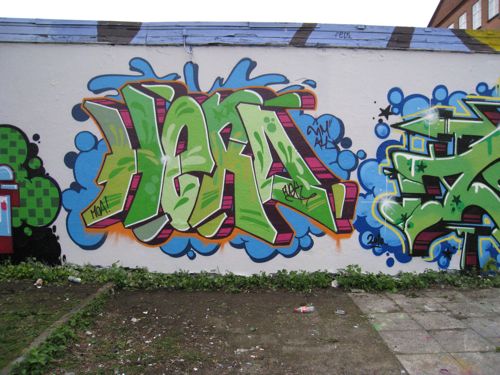
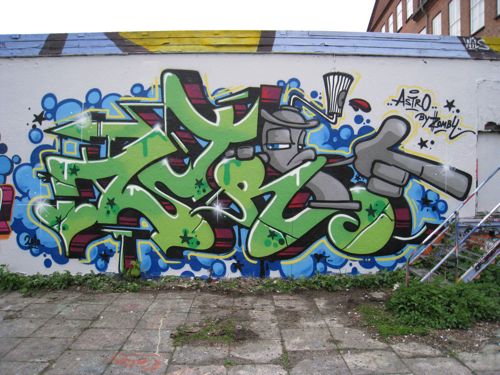
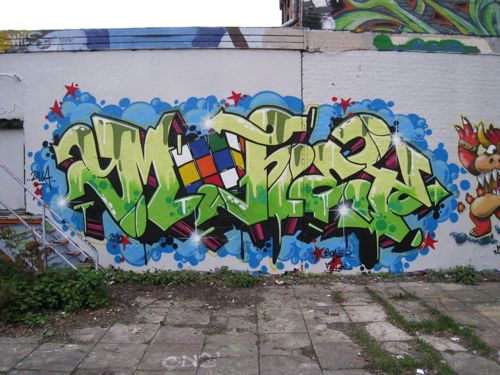
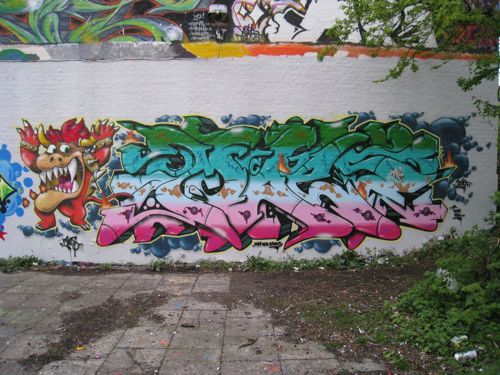
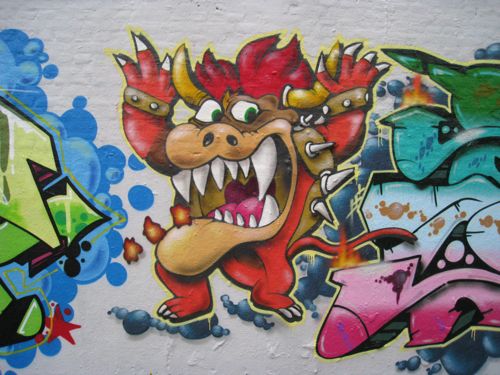
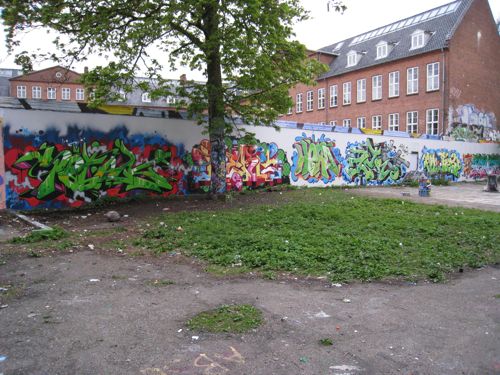
Copenhagen Graffiti // (Walls) //

KRATOS
Team is pleased to present a group exhibition organized by the Zürich-based curator Raphael Gygax. KRATOS – ABOUT IL(LEGITIMATE)D POWER will run from the 27th of May through the 26th of June 2010. The exhibition will include works in a variety of mediums by five artists: Maja Bajević, Maria Eichhorn, Teresa Margolles, Gianni Motti and Artur Zmijewski. Team Gallery is located at 83 Grand Street, cross streets Wooster and Greene, on the ground floor.
This exhibition examines aspects of power and how they function within a broad social field. The selected artists all question the distribution, manifestation, and appropriation of power in so-called democratic systems, focusing on self-determination and artistic freedom. The work is often born from individual experience and activities that initially appear to be removed from the trajectories of cultural production and the art market.
Bosnian-French artist Maja Bajević (Bosnia-Herzegovina, b. 1967) presents a video entitled How do you want to be governed? In the video, Bajević frames a tense, yet unemotional female subject, while a male hand enters the frame and engages with her physically. Although his body remains invisible, his voice can be heard, asking the question “How do you want to be governed,” over and over. The woman’s face is alternately caressed and nudged by the hand, eliciting an anxiety over the threat of physical violence. The viewer is drawn into a psychological game in which the anticipation of violence initiates a discourse surrounding the abuse of power over the individual.
Maria Eichhorn (Germany, b. 1962) presents a series entitled Prohibited Imports, consisting of a re-photographed Robert Mapplethorpe catalogue after images of male genitalia were sanded away at a Japanese customs facility, where the book was seized as Eichhorn attempted to import it into that country. The photographs simultaneously obscure and heighten our concentration on what is no longer pictured. The performative intervention that Eichhorn facilitates maps out issues of censorship as it pertains to sexuality and freedom of expression, foregrounding the imposed moral codes of the Japanese officials. In this way, Mapplethorpe’s original project is intensified through the lens of a more contemporary socio-political endeavor.
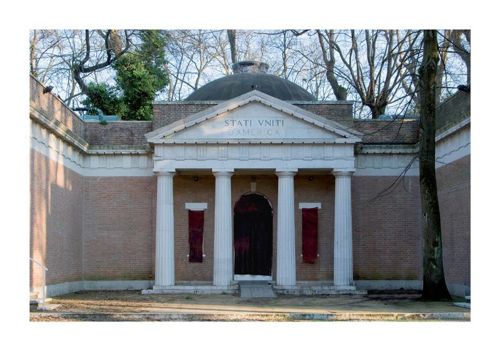
As a volunteer at a Mexico City morgue, and a scholar of forensic medicine, Teresa Margolles (Mexico, b. 1963) mines corpses to critique the social injustice that exists even in death. Having witnessed the disappearance of the bodies of the underprivileged, and mass cremations of unidentified persons, Margolles began to create artworks that implicate this reality as symptomatic of a misguided value system. In this exhibition, Margolles expands upon these concerns with a selection of baroque jewelry, handmade from shattered glass extracted from the anonymous victims of drug related crimes, shot to death in their cars. Margolles will also present a photograph of the U.S. Pavilion at last year’s Venice Biennale from whose façade she had hung blood stained tarps. The fabrics are from an ongoing series in which the artist soaks up freshly spilled blood at drug-related murder scenes, afterwards installing them as flags or “paintings” in various locations.
Gianni Motti (Italy, b. 1958) uses ordinary events and the culture of spectacle in order to highlight human absurdity and frailty. In The Messenger, Motti turns his lens on Raël and Brigitte Boisselier, founders of the Raëlian Church and the Cloniad sect, religions of individualists who believe in extra terrestrials and clones, respectively. Motti’s staged events are often experienced through narrative and second-hand photography taken by on-lookers. His actions oscillate between rational and irrational, irony and provocation, rumor and misunderstanding.
Artur Zmijewski (Polish, b. 1966) creates films in a documentary style, often with ethical challenges and unpredictable outcomes, appearing as tests or improvisations with allegories of violence, victimization, power structures, and democratic/capitalist systems. For this exhibition the artist presents two single channel videos side by side in which a day in the life of two subjects, Yolanda in Mexico City, and Patricia in Berlin, are edited down to two 15 minute visual diaries – they work, sleep, and in between take their children to school, wash them, and clean their apartments. Shot in a reality television style, although not adhering to it’s familiar template of scrutinizing the rich and beautiful, or the more dramatically disenfranchised, Zmijewski’s films offer a glimpse into the lives of “everyday” citizens of democracy.