Ben Rivers
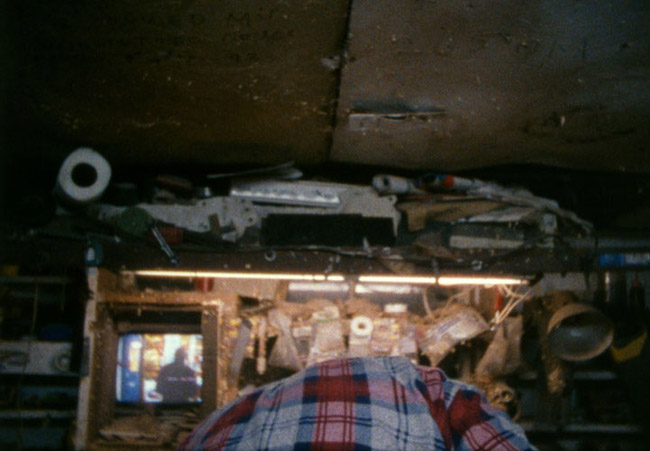
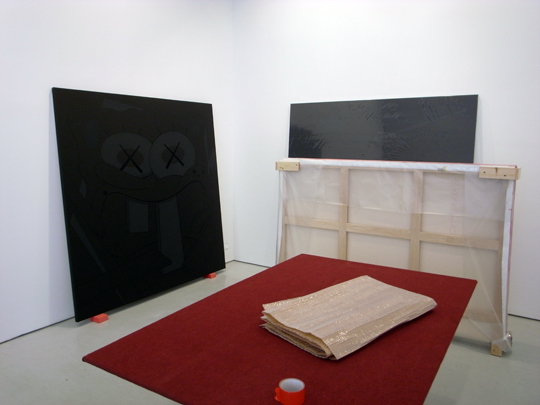
For his first exhibition at the gallery Ben Rivers has assembled a dwelling from discarded and reclaimed building materials. Inside, his film Origin of the Species(2008) offers a clandestine portrait of an elderly man living in a ramshackle cottage in the wilderness of the Scottish highlands. The man devises his own technologies for day-to-day subsistence while pondering the workings of the universe and the scope of human knowledge. Although there seems a vast discrepancy between Big Bang theory and animal trapping, the voiceover forays into such grand universals as evolution and epistemology, bridging this gap through ruminations on the experience of nature.
Rivers’ film is made using an old Bolex camera, which imparts a quality that cannot be digitally constructed. At times the blissed-out end of a reel is left apparent as errant bursts of yellow and orange light obliterate the image. Scratches similarly draw us back to the film’s surface and emphasise the mechanical nature of its coming into being. Just as the man wonders at the destructive results of the too-quick evolution of the human brain, the near-obsolescence of film confirms this pace of change; and as his retreat from civilisation takes on the characteristics of an idyll, Rivers’ own shack reminds us of the awkward reality of this.
Origin of the Species is unflinchingly beautiful, without irony or sentimentality. As an artist working with film, though, Rivers is careful to put its nostalgic qualities to more testing use. His studies of the contingent lives of others are as much to do with investigative anthropology as they are utopian escapism.
Ben Rivers born Somerset 1972, lives and works in London.
Rivers’ previous solo exhibitions in the UK include: A World Rattled of Habit at A Foundation, Liverpool, 2009; Slow Action/Origin of the Species, Picture This, Bristol, 2009; On Overgrown Paths, Permanent Gallery, Brighton and The Regency Town House, Hove, 2008. In 2008 his work was screened as part of Nought to Sixty, at the ICA, London and at the 52nd BFI London Film Festival.
Rivers won the Tiger Award at the 2008 International Film Festival Rotterdam and is recipient of the London Artist Film and Video Award (LAFVA).
Origin of the Species was funded by Arts Council England, with the support of Film London Artists’ Moving Image Network. Thanks to Measure (www.measure.org.uk) and A Foundation, Liverpool.
Feverary
CHRIS BURDEN: The Heart: Open or Closed
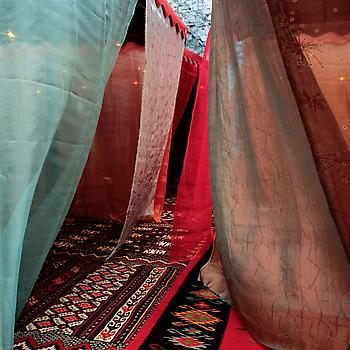
Burden continues his interest in built structures and the role they play in reflecting cultures. In
three individual but interrelated works, he turns his attention to the beauty and metaphorical
possibilities of the architectural folly.
At one end of the gallery Burden has recreated Nomadic Folly (2001). First presented at the
Istanbul Biennial in 2001, this installation is his fantasy of a cultivated nomad’s tent. The structure
is comprised of a large wooden deck made of Turkish cypress and four huge umbrellas. Visitors
can relax and linger in this tent-like structure, replete with opulent handmade carpets, braided
ropes, hanging glass and metal lamps, and rich, sensuous wedding fabrics embroidered with
sparkling threads and traditional patterns. Soothing, seductive Turkish-Armenian music spills
from the tent’s interior. At the other end of the gallery is Dreamer’s Folly (2010), a series of three
highly ornamental cast-iron gazebos reminiscent of those common to traditional English gardens.
The three gazebos have been reconfigured to form one structure. Lacy “Tree of Life” fabrics are
draped around the exterior to complete a beautiful sanctuary in which to dream.
But the calm and beauty of this environment is violently disrupted by the video projection The
Rant (2006), where Burden’s goggled face appears in close-up and many times larger than life,
hovering just above water. In this performance he is a ranting xenophobic preacher delivering a
short, intense message in French (with Italian subtitles), an impassion rejection of the Other.
Like all of Burden’s exhibitions, The Heart: Open or Closed resonates with ambiguity on many
levels. This disarmingly beautiful installation may be his most tender and humanistic to date,
pointing to the beauty in the heart of two different cultures and the hate that can divide them.
Chris Burden was born in Boston, Massachusetts in 1946. He received his BFA from Pomona
College in Claremont, California and his MFA from the University of California at Irvine. Burden’s
solo exhibitions include “14 Magnolia Doubles” at the South London Gallery (London, 2006); “Chris
Burden” at the Baltic Center of Contemporary Art (Gateshead, 2002); “Tower of Power” at the
Museum Moderner Kunst Stiftung Ludwig (Vienna, 2002); “When Robots Rule: The Two Minute
Airplane Factory” at the Tate Gallery (London, 1999); and “Chris Burden: A Twenty Year Survey”
at the Orange County Museum of Art (Newport Beach, 1988). His permanent outdoor installation
at the Los Angeles County Museum of Art (LACMA) entitled Urban Light was unveiled in 2008,
comprising of 202 restored antiques streetlights. Later the same year, What My Dad Gave Me, a
65-foot skyscraper made entirely of Erector Set parts was installed at Rockefeller Center in New
York City. His work is featured in prominent museum collections such as the LACMA and the
Museum of Contemporary Art, Los Angeles; the Whitney Museum of Modern Art and the Museum
of Modern Art, New York; the Tate Gallery, London; the Middelheim Museum, Antwerp, Belgium;
the Inhotim Centro de Arte Contemporanea, Brazil; the 21st Century Museum of Contemporary Art,
Kanazawa, Japan; the Museum of Contemporary Art, Chicago, among others. Burden currently
lives and works in Topanga, California.
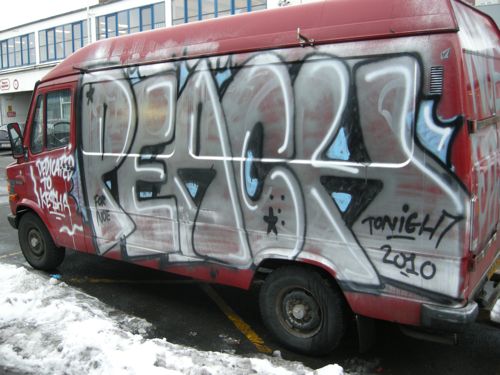
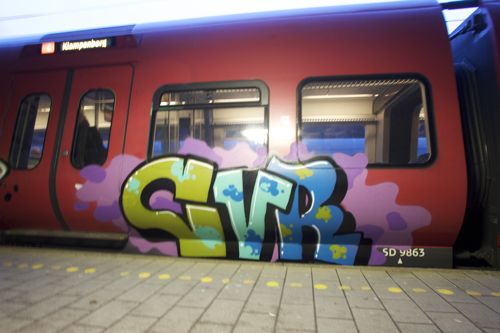
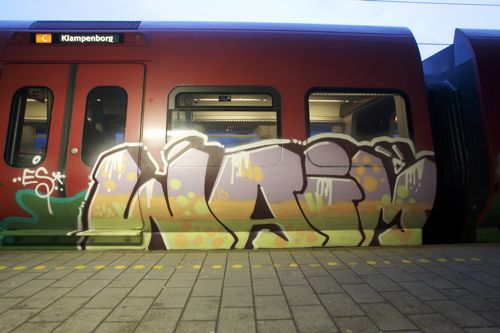
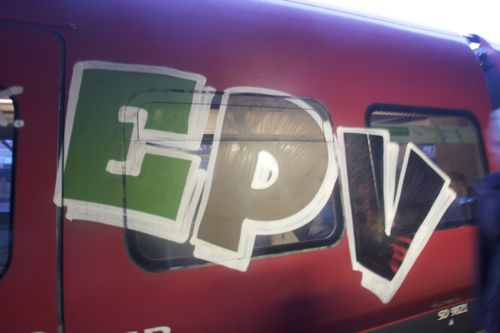
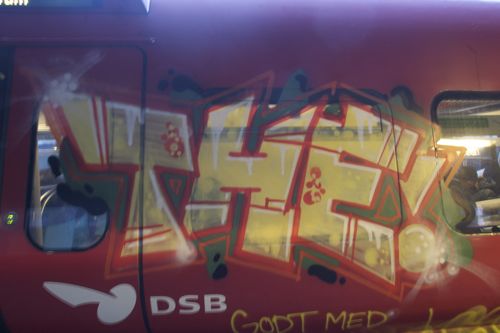
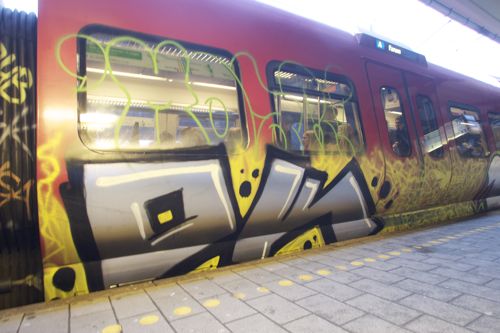
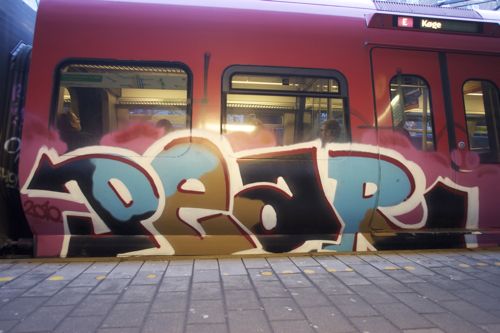
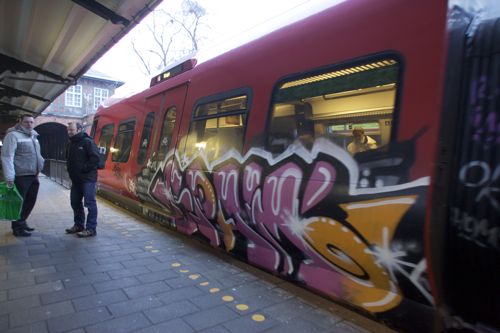
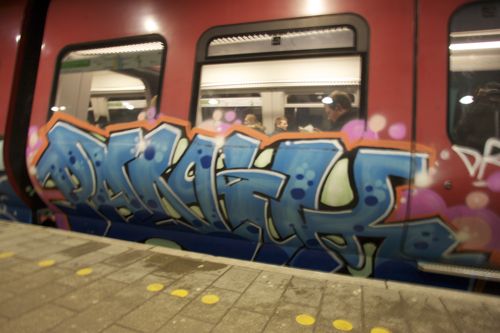
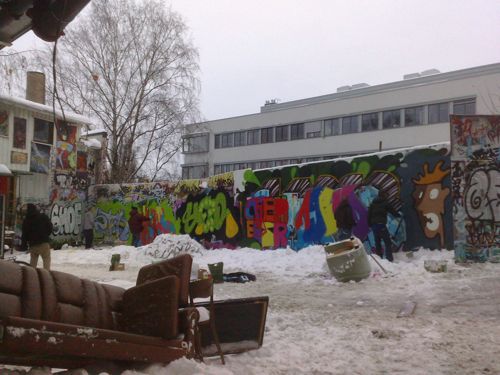
Copenhagen Graffiti (S-Trains)
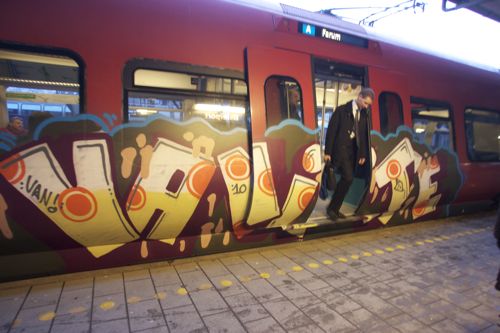
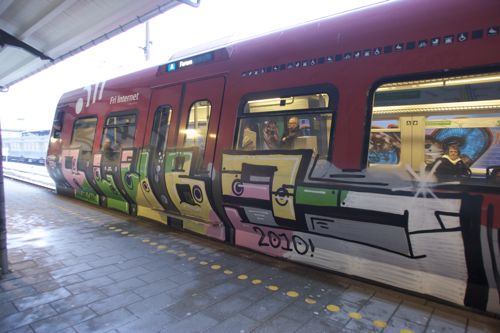
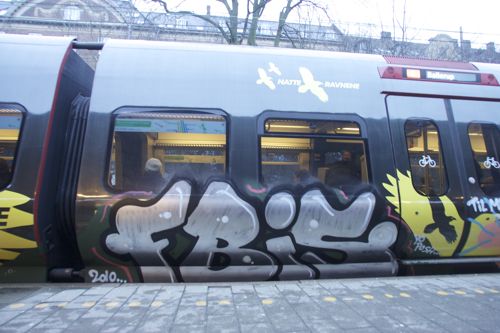
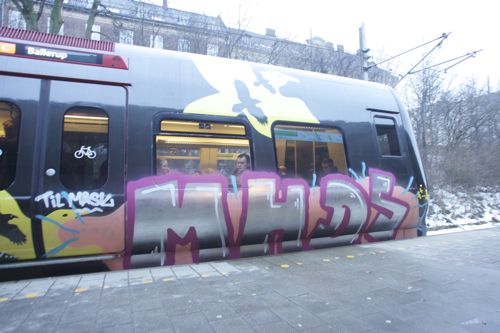
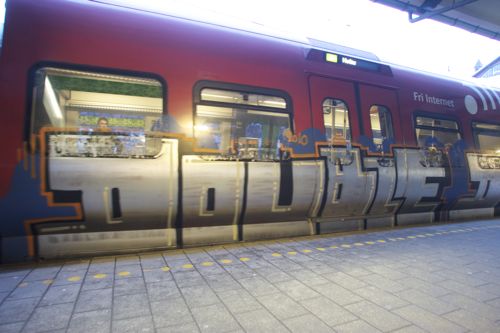
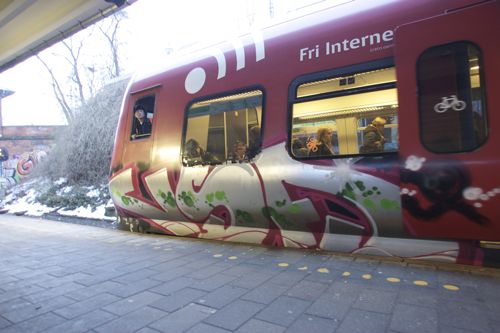
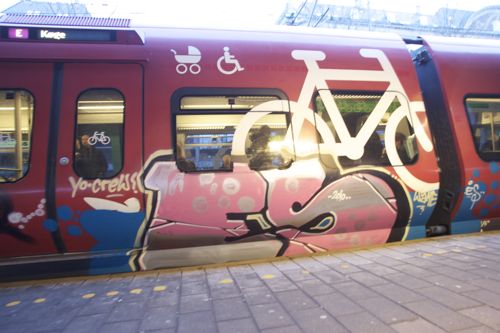
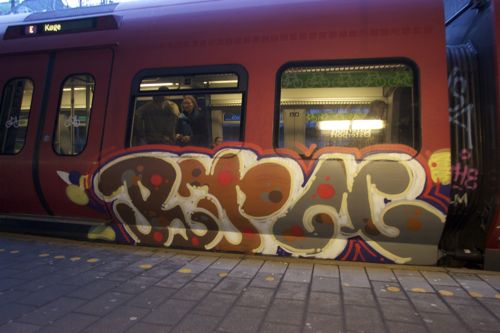
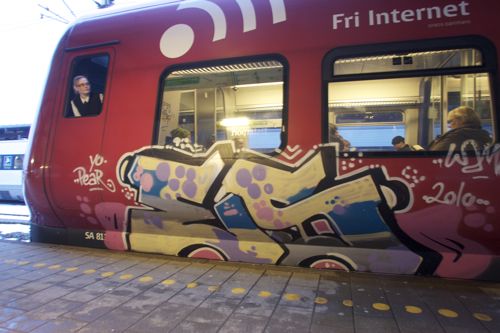
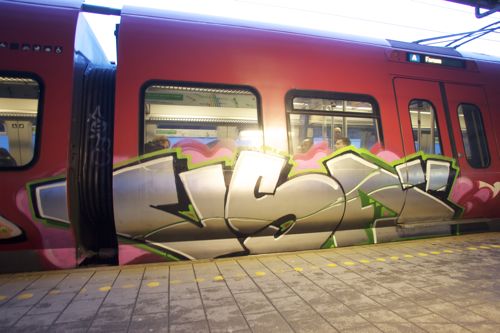
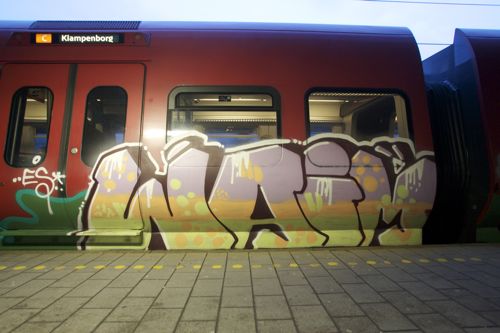
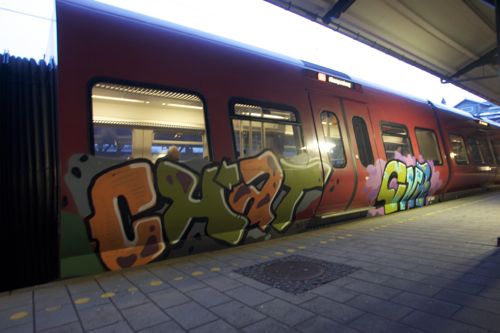
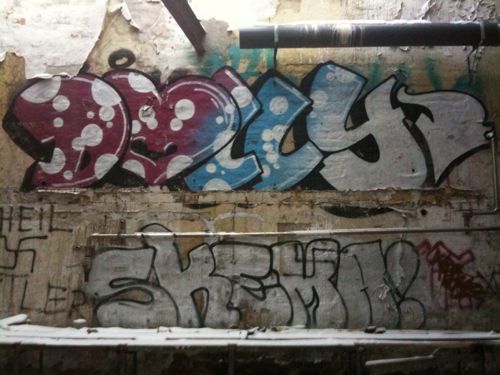
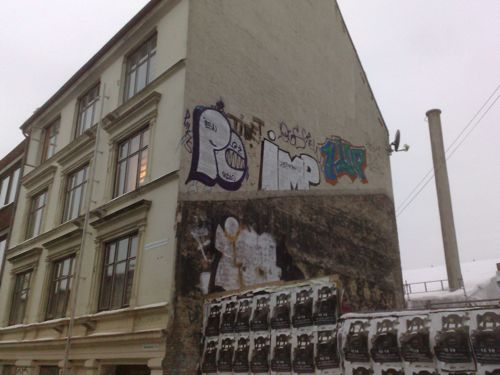
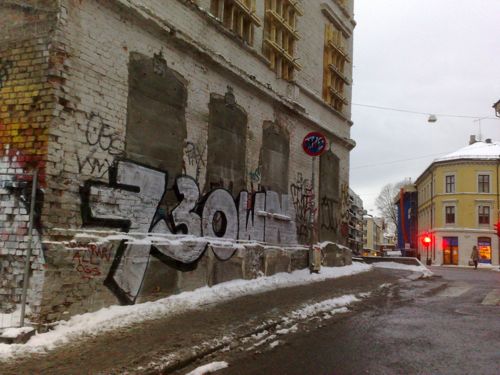
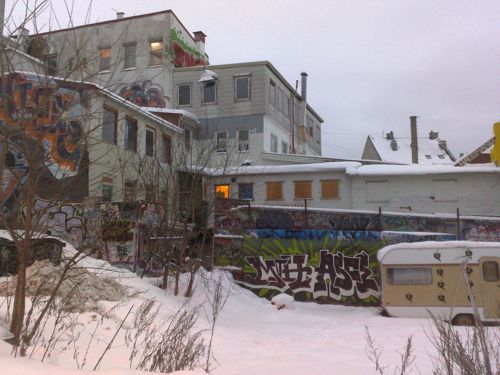
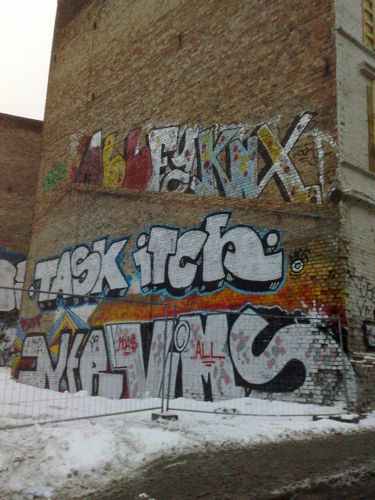
Oslo Graffiti///
Saturday Sessions
Brooklyn is Burning presents this weekend’s installment of Saturday Sessions. BiB will host a video program and four performances featuring Try Cry Try, Gerorgia Sagri, Ann Liv Young, and Morty Diamond in the 3rd floor Main Gallery. Organized by Andres Bedoya and Sarvia Jasso, BiB is a video and performance event interested in exploring the roles and definitions of sexuality and identity.
Marina Abramović’s Chair for Man and His Spirit has been re-installed on P.S.1’s terrace. Additionally, Abramović will sign monographs for her upcoming MoMA retrospective, Marina Abramović: The Artist is Present, along with her latest publications.
In conjunction with the book signing, Abramović has invited Davide Balliano to present, But I Wasn’t Young Anymore, a day-long performance that transforms abstract notions of life and death into a tangible experience. Balliano performs from 12-6PM in the 1st floor Painting Gallery.
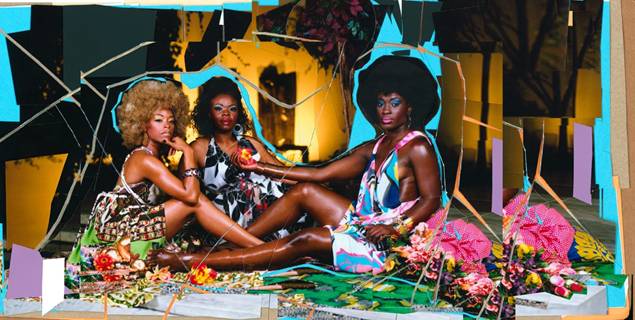
We welcome artist Mickalene Thomas for the third iteration of the On-site series in the P.S.1 lobby. Mickalene Thomas creates visual explorations of female African American beauty within her photographs and paintings. Her portraits are inspired by pin-up images of the 1960’s and 70’s, and by her own mother, a former model. They address questions of femininity, strength, and glamour. For P.S.1’s Lobby, Thomas presents three subjects in an ornate setting, in which the sitters exude intense confidence and sensuality. The work is collaged from fragments of a single image and subsequently re-photographed, creating a puzzle-piece effect that alludes to the process of its making.
Kevin Cyr & Jessica Hess
Amir Zaki
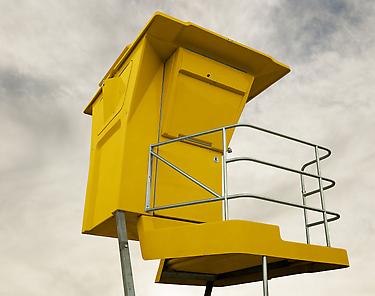
Perry Rubenstein Gallery is pleased to announce Amir Zaki, Relics, a new body of photographic “portraits” of elevated lifeguard towers taken along different beaches in Southern California. The exhibition represents a continuation in the artist’s ongoing interest in architectural structures, but marks a distinct shift in terms of location—from urban Los Angeles to the beaches south of the city. Amir Zaki Relics will be on view from May 6 through June 15, 2010.
With the new series, the artist’s intention is to create photographs that transform seemingly banal lifeguard towers that dot the Pacific beaches of Orange County into something other. They appear as awkward monumental public sculptures or stylized and non-functioning relics. The images of the lifeguard towers function less as a typology, but rather anthropomorphized as a group of portraits, not only because they resemble heads resting on necks, but also because the individual character of each tower is emphasized in a very specific way. Each of the images of the lifeguard towers are photographed against a sky, shot from below, and never include any trace of sand or ocean. Because they are isolated from any reference to locale, they sometimes appear to be other than what they actually are.
Zaki has digitally altered the images in a variety of ways ranging from simple color changes to gravity defying, physically improbable structural modifications. He has digitally removed any visible access routes such as ladders or ramps leading to the tower platforms. This appears as a subtle subtraction, but renders the towers essentially dysfunctional. The artist has pared down the visual information in this work to two fundamental elements, which are the tower and the sky (subject and background). Many of the towers have been paired with skies photographed on a different day, with rather incongruous lighting.
Also to be included in the exhibition are a group of images depicting the iconic ‘beach mobile’, the Volkswagen Vanagon. The Vanagon images have manifested in a photographic diptych and a triad of abstract mandala-like patterns. The Vanagon is essentially a slightly glorified box, an elongated cube designed to be able to fit the maximum amount of fun-based cargo, with little regard for luxury. It represents summer day trips, leisure, camping, surfing, and a bygone era of automobile design that emphasized form following a maximum use of space, as opposed to concerns with ergonomics, aerodynamics, or electronic gear. In that sense, like the transformed lifeguard tower, it is a relic.
The photographic diptych of the Vanagon is presented as a Yin-Yang duality between sunrise and sunset, moonrise and moonset. How one decides which is which depends on whether one believes the images depict a ‘west’ coast or ‘east’ coast. The Vanagons face each other, as polar opposites (solar/lunar/dawn/dusk) but simultaneously equivalent and interchangeable. This duality is directly based upon the color scheme of two Volkswagen Vanagon models from 1982. One is a cool, two-tone blue/light-blue (representing dawn) with a full moon and daybreak-pink- purple sky above, and the other a warm, two-tone orange/cream (representing dusk) with a full sun and yellow-orange sunset sky above.
Despite all of these apparent polar opposites or dualities, in actuality Zaki made the two original photographic exposures just a few minutes apart during one mid- morning under an overcast sky, using only one Vanagon. The ‘other’ Vanagon was created digitally by altering the color palette of the auto paint. The dramatic cliché skies were completely concocted using multiple photographs of skies, moons and suns. Now as a pair, the Vanagons are idealized, nearly all of the hardware and blemishes digitally erased.
Both the images of lifeguard towers and of Vanagons share a fascination with the familiar made unfamiliar, by creating abnormal looking structures/objects as portraits.
Amir Zaki has exhibited internationally since 1996. His work is included in the following public collections: Henry Art Gallery, Seattle; New Museum of Contemporary Art, New York; Orange County Museum of Art, Newport Beach, CA; and, the Whitney Museum of American Art, New York, among others. Relics marks the artist’s third exhibition with Perry Rubenstein Gallery.