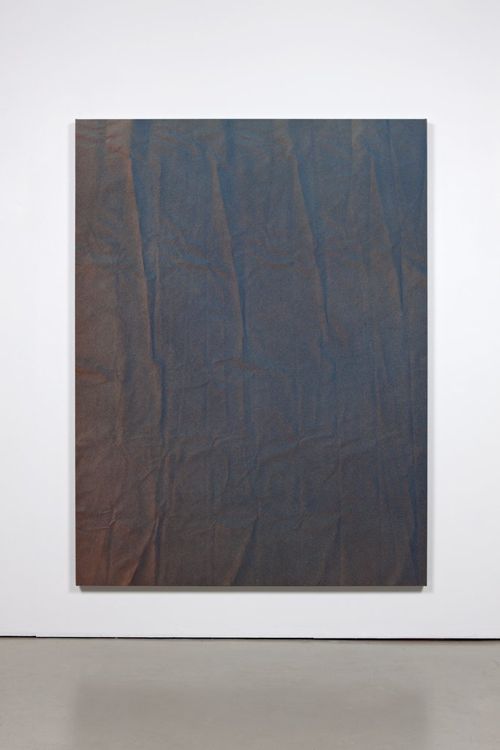
Tag: Standard
Gardar Eide Einarsson
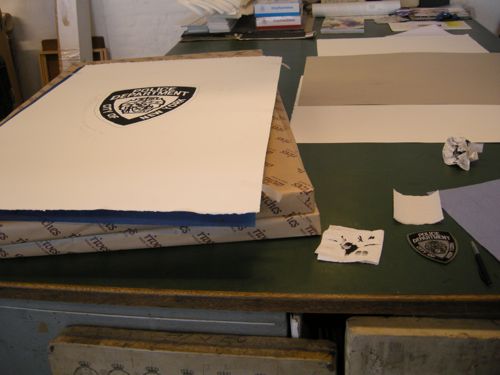
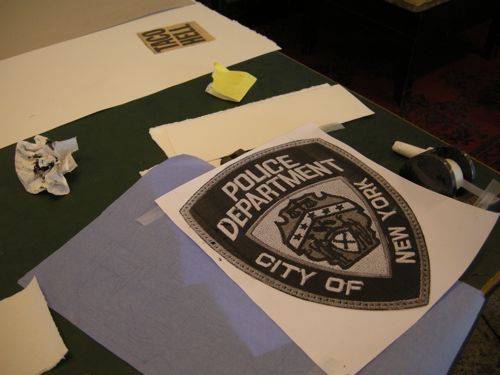
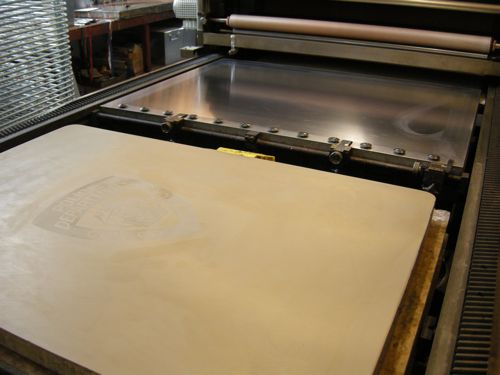
Gardar`s is making new prints the next week.. Check it out..
Gardar Eide Einarsson
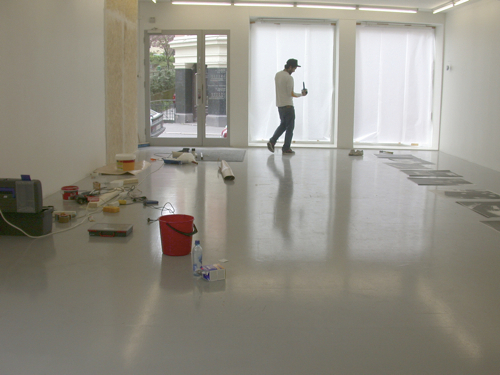
Matias Faldbakken / “The Hills”
Marius Engh
The first work of Marius Engh I ever saw had me pretty much seeing nothing. Entering the installation of his graduation exhibition almost ten years ago I was offered nothing more than a pitch dark space. Hesitantly inching my way forward, I realized soon after having turned several corners that the space had also had turned into a labyrinth. I was confronted with a profound doubt regarding the point and purpose of the piece, but more importantly I was doubting my ability to return to the entrance. The solution was somewhere in between: I stood still and hoped for my eyes to adjust to the darkness. Marius Engh’s works have since always required and rewarded in the same manners: wait and there is a chance you’ll be able to see.
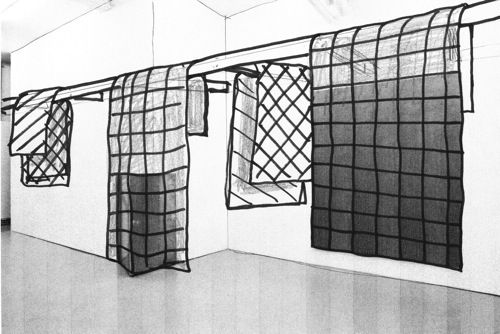
“Time has turned into space, and there will be no more time till I get out of here” – Engh’s choice of title does not only serve as a reminder of the disorientation experienced upon initially encountering his works, but also serves as a reminder of the inherent theatrical qualities to his sculptures and installations. For his third solo exhibition at STANDARD (OSLO) Engh leaves the gallery with a single work; a beam structure running the entire length of the exhibition space from which four quilts in have been suspended. A clear, clean, but yet eerie and empty arrangement. Engh’s work has the incompleteness of a prop or a backdrop, still awaiting its activation by the presence of somebody or something else. Taking its title from Samuel Beckett’s Texts for Nothing (1-13) (1950-52), the installation reveals an interest in a similar form of standstill. Or at least – knowing that a complete condensation of verbal and pictorial information is not permissible – a slowing down of coming into knowing. As is the case with so much of Engh’s work it possesses an annoying quality: an insistence on seemingly insignificant signs that in the absence of alternatives not only have to be trusted as the sole source of information but also trusted to be of some importance.
The pessimism of Michael Fried every so often proves itself purposeful; still waiting for that convenient glimpse of light to interrupt the solid opacity of Engh’s installation, I was reminded that indeed my fumbling around could be what there was. Fried’s seminal essay “Art and Objecthood” (1967) launched an attack on the then contemporary practice of minimalist art and what Fried saw as a location of content in the viewing situation rather than with the work itself – making the viewer’s response (the search for the pictorial content that has been omitted) the matter of concern. Why then even turn on the light? Touché, Monsieur Fried, but then again the question remains (with the fear of sounding zen kitsch): what constitutes absence and what constitutes presence? Rephrasing the question: how have the threshold values of information or notions of iconography (or its absence) been subject to continuous negotiation since Malevich’s monochrome and the void turned pictorial, Yves Klein’s leap into the void, Robert Smithson’s “Museum of the Void” or John Cage’s “4’33″” and the claim that “there is no silence that is not pregnant with sound”?
What Engh offers may, however, not so much be silence as a devaluation or re-evaluation of sign value. The four quilts here on display seem as much motivated by decorative as by communicative ambitions, leaving it unclear whether they are to be stood as mere ornaments or having any significance as signs. Hanging from the naked wooden structure, the four quilts resemble the flags of an optical telegraph where the bold patterns and rich array of colours would serve as syllables. However, the intense sensation of a language unfolding does not prevent the simultaneous sensation of meaning folding in. Recognizing being underprivileged yet again, I merely wait for the muteness to perforate.
“I LIKE THE WORK, BUT MY WIFE IS STILL CONCERN. PLEASE KEEP ME INFORM ABOUT NEW WORKS.”
GARDAR EIDE EINARSSON / MARIUS ENGH / MATIAS FALDBAKKEN
“I LIKE THE WORK, BUT MY WIFE IS STILL CONCERN. PLEASE KEEP ME INFORM ABOUT NEW WORKS.”
“When the question is raised, of writing an introduction to a book of a creative order, I always feel that the few books worth introducing are exactly those which it is an impertinence to introduce. I have already committed two such impertinences; this is the third, and if it is not the last no one will be more surprised than myself. I can justify this preface only in the following way. One is liable to expect other people to see, on their first reading of a book, all that one has come to perceive in the course of a developing intimacy with it.”
– T. S. Eliot: “Introduction”, Preface to Djuna Barnes: Nightwood, Harcourt, Brace & Co., New York, 1937
“As my admiration for the book has not diminished, and my only motive for revision would be to remove or conceal evidences of my own immaturity at the time of writing – a temptation which may present itself to any critic reviewing his own words at twelve year’s distance – I have thought best to leave unaltered a preface which may still, I hope, serve its original purpose of indicating an approach helpful for the new reader.”
– T. S. Eliot: “Note to Second Edition”, Preface to Djuna Barnes: Nightwood, Faber and Faber, London, 1949
Throughout the course of the exhibition works by the artists can be seen in exhibitions such as:
Simon Denny: “Celebrities’ Houses at Night: A Projection”

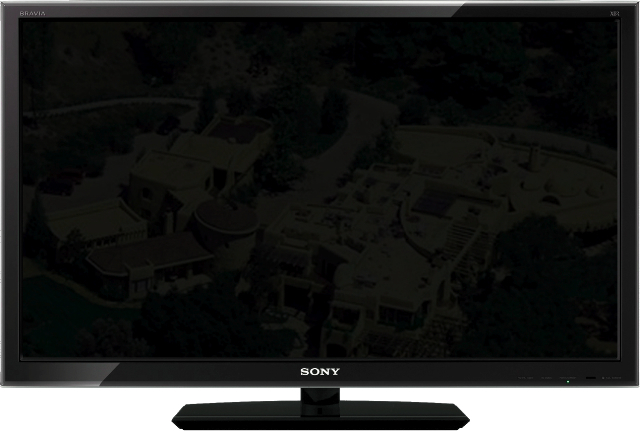
SIMON DENNY: “CELEBRITIES’ HOUSES AT NIGHT: A PROJECTION”
13.11.-13.12.2009 / PREVIEW: 13.11.2009 / 19.00-21.00
—–
EDITOR: “Look, kid, you got a nice idea, with the house thing, it’s just not something I can get behind, alright?”
WILL SMITH: “Ok, ok, alright – see ‘cos you not lettin’ your cerebellum rotate man. Listen, look at this: It’s not just pictures, I wrote little stories with them too! B-blam! Ahh! You didn’t notice that one, right? See? It’s different now, see, cos I’m not just a photographer, man, I’m photographer and a writer – I’m ambidextrous”(i)
“Every spectator of a television mystery knows with absolute certainty how it is going to end. Tension is but superficially maintained and is unlikely to have a serious effect any more. On the contrary, the spectator feels on safe ground all the time… Everything somehow appears ‘predestined’.”(ii)
“Mass culture, if not sophisticated, must at least be up to date.”(iii)
For his exhibition at STANDARD (OSLO) Simon Denny will again focus on reviving an understanding of television as a material object. The reconsideration of the traditionally opposed fields of broadcast television art and video practice1will again pitted against each other. On top of this, an attempt to spotlight the advance of display technology in exhibitions will bring together the LCD monitor and the digital projector in a retrograde, positivist gesture. This time taking his cue from the content of the international hit television show “The Prince of Bel-Air” and feeding it through the filter of the in-progress event of the show’s reissue – season-by-season, as boxed set DVDs – Denny will project on the anticipation of the delayed release and production-to-shelf-materialization of the series’ final two seasons and link the gradual physical thinning of the box-sets’ packaging to the receding perceived differences between digital images and physical objects, content production and commodity production, LCD monitor and digital projector.
Following a close reading of Adorno’s classic “How to Look at Television”, the project will interpret genre guidelines of the medium, presenting a characteristically up-to-the-minute-looking mystery show consisting of “various layers of meanings superimposed on one another, all of which contribute to the effect”2. The final presentation of this multimedia rehash will resemble the style of other exhibitions, everything somehow seeming ultimately ‘predestined’3. Just as the radio listener who catches the beginning of Tschaikovsky’s Piano Concerto as a theme song, knows automatically, ‘aha, serious music!’ or, when he hears organ music, responds equally automatically, ‘aha, religion!’ viewers will approach Denny’s show with the phrase ‘aha, video installation’.4
Denny will frame the exhibition around the expanded-marketing group Omni Consumer Products’ practice of what they call ‘de-fictionalising’5 from the screen, such as “True Blood”’s drink “Tru Blood”, manufactured by the company in collaboration with the series’ second season release. The exhibition will aim at a similar effect, admiring the clarity of this reality blurring gesture. “Due to their calculative nature, these rationalized products seem to be…clear- cut in their meaning…[and are, in a way, able to be]…boiled down to [an] unmistakable ‘message’.”6
From an episode of the as-yet-not-re-released 5thseason of the Fresh Prince7, Denny ‘de-fictionalises’ an idea for a coffee-table book that Will Smith dreams up to impress his girlfriend. “Celebrities’ Houses At Night” is a series of photographs taken by Smith of Bel-Air Celebrities’ abodes that, although intended for book publication, never makes it into page form. Uncannily resembling canonical moments in west coast conceptual photographic and book making practice such as Ed Ruscha’s “26 Gasoline Stations”, Celebrities’ Houses At Night is a never-to-be-realized book of serial photography, with its inception in a TV show, and its realization as a pile of photographs. Denny “broadcasts” this idea to Oslo, in a re-run that anticipates a re-release, in a transmission that takes the form of a physical product, in a blurring of contemporary moving image display formats, in a projection of marketing that uses only the distribution available to a gallery.
“The entertainment business was a distribution business, in other words people who controlled pathways to people’s eyeballs, where they sat in the movie theatre or how they got cable, those people controlled the media business…What makes the Internet a radical game changer is that it makes distribution a commodity – in other words, anybody can have a pathway to an eyeball – marketing becomes more important but distribution is almost trivial.”
Dan Rees & Fredrik Værslev
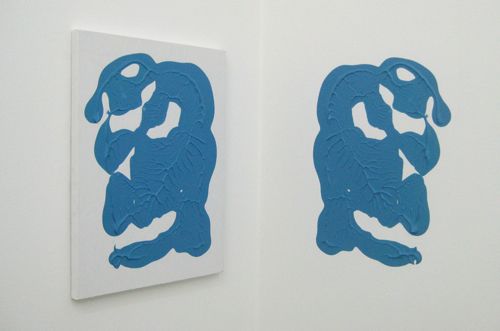
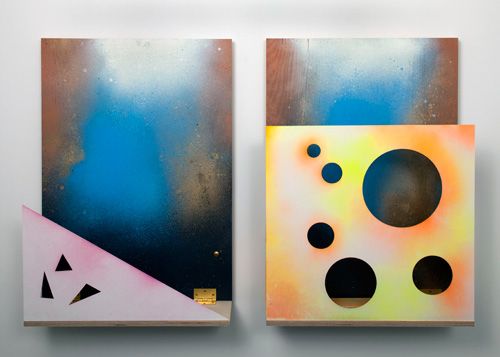
STANDARD (OSLO) is pleased to present “Shelf Paintings (Pottery In October) (Decorations By Dan Rees)”, a collaboration between artists Dan Rees and Fredrik Værslev. Having studied together at Städelschule in Frankfurt am Main, the continued conversation has resulted in a set of ten collaborative works that are linking the anecdotal with the analytical in regards to painting as product and process.
RED:
“I’m a much more confident person than when I started here, which comes with age” […] “I’m able to handle things which I wouldn’t back then, things that would have bothered me. If I wasn’t playing well I was devastated. Now I’m disappointed, but I know I’ll come back.”
– Ryan Giggs
GOLD:
“‘Shelf Paintings’ is a series of paintings executed with spray paint on plywood. The prototype was based on my mothers description of an ideal painting – a painting that would not interfere with whatever was placed in front of it, but rather function in the way that the perfect blouse brings out the tones of your skin or the colour of your eyes. The motives of these paintings are abstracted or faded colour formations similar to the backdrop of the “Good Morning America” TV studio, to that of tapestry, or the sky on a nice evening. Underneath the paintings a wooden shelf has been mounted with hinges. The shelf is sort of a platform for decorations of all kinds. The colour formations on the paintings are primarily based on wishes from those who will decorate them.”
– Fredrik Værslev
GREEN:
“And I’ll come running to tie your shoe
I’ll come running to tie your shoe
I’ll come running to tie your shoe
I’ll come running to tie your shoe.”
– Brian Eno, “I’ll Come Running” from “Another Green World” (1975)
WHITE:
Squash or smack / white on white / a ping-pong painting.
Dan Rees (b. 1982, Swansea, United Kingdom) lives and works in Berlin. Since graduating from Städelschule, Frankfurt am Main in 2008 Rees has had solo exhibitions with Tanya Leighton Gallery, Berlin, Galerie Andreas Huber, Vienna, as well a solo presentation at Art Basel 40 earlier this year with T293, Naples. Throughout the course of the exhibition Rees’ works can also be seen in his solo exhibition – “Junk On A Thing” – at Johan Berggren Gallery in Malmö.
Fredrik Værslev (b. 1979, Moss, Norway) lives and works in Drøbak, Norway, and Malmö, Sweden, where he will graduate from the Malmö Art Academy in 2010. Recent and upcoming exhibitions include Johan Berggren Gallery, Malmö; Studio, Venice; Neue Alte Brücke, Frankfurt am Main; Basis, Frankfurt am Main, and Economy, Frankfurt am Main. Værslev is also serving as curator of the project space Landings, located outside of Oslo.