Tag: New York
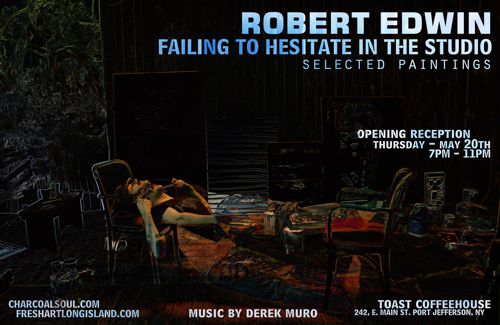
Robert Edwin //
AMY YAO: Come to My Opening!
Piet van den Boog
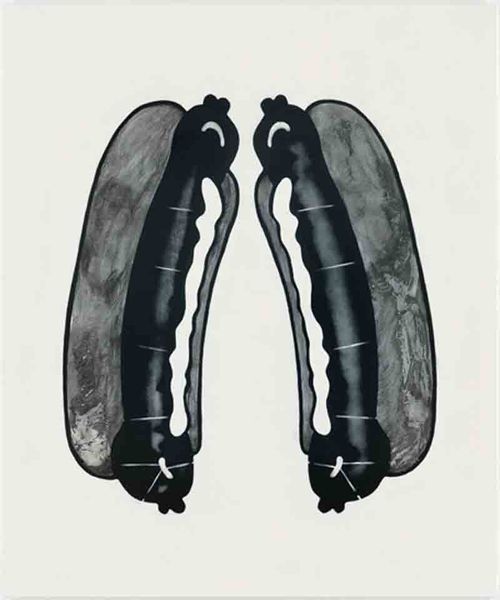
Tomoo Gokita
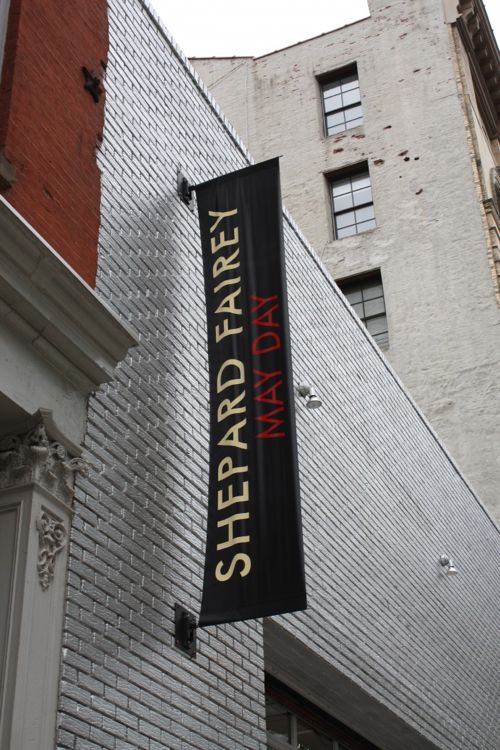
May Day by: Shepard Fairey ///
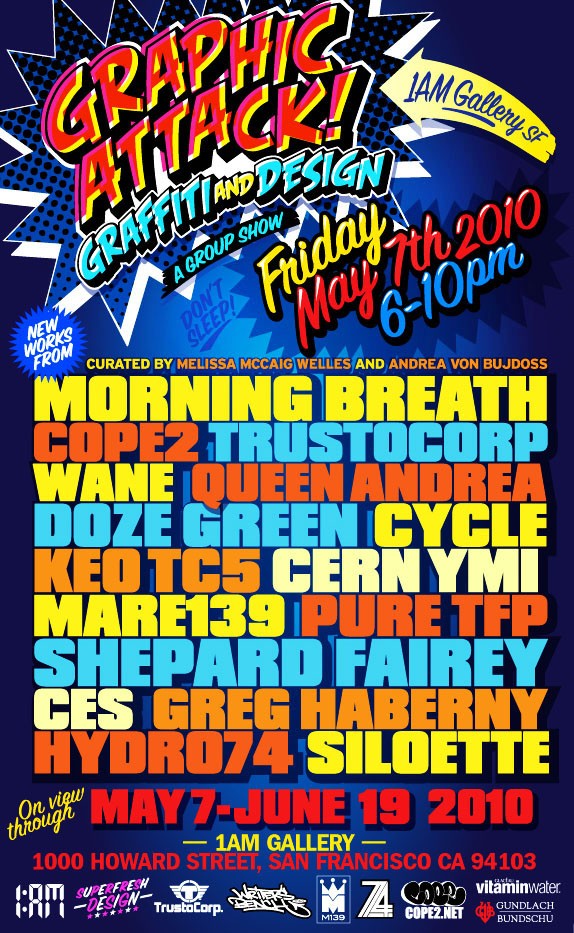
Graphic Attack //
Transfer Function @ ZieherSmith
The transfer function reveals how the circuit modifies the input amplitude in creating the output amplitude.
Transfer Function features four artists merging and manipulating – physically and visually – their mediums including photography, painting, printmaking, textiles, ceramics, and sculpture – creating their own unique hybrids. The results are often imbued with further juxtapositions such as the personal with the abstract and the mass produced material or image with the handmade.
Jessica Jackson Hutchins’s ceramics, photographs, prints, found objects and sculptures are inextricably linked to each other and defy their limits. For example, the woodblock that begot a series of monoprints was also a major sculpture in her recent solo exhibition at Derek Eller Gallery, New York, after having served many years as her family table. Her off-kilter, bulbous ceramics often occupy household furniture, thereby transforming the two into a new sculptural being. The artist was recently lauded in press including The New York Times and New York Magazine for her contribution to the 2010 Whitney Biennial.
Sam Moyer’s sculptures carry conceptual heft balanced by their history as commonplace materials transformed by both art and crafting processes. Incorporating photography and painting into her sculptural practice, the artist creates objects that somehow seem both handmade and prefab. Her work was seen in 2009 group shows at the St. Louis Contemporary Museum and P.S.1 Contemporary and will be in P.S.1’s 2010 Greater New York. Her recent solo exhibition at Rachel Uffner Gallery was noted by The New Yorker and Time Out New York.
Sara Greenberger Rafferty works with found imagery, printing portraits in CMYK ink on a desktop printer. She then manually reworks the prints by digital manipulation before finally reproducing them as exposed photographs. The visceral results merge the aesthetics of photography, collage, watercolor, and even body art and embody a wide emotional range from humor and melancholy to disgust. She has presented solo projects in New York at Rachel Uffner Gallery, The Kitchen, and P.S.1 Contemporary.
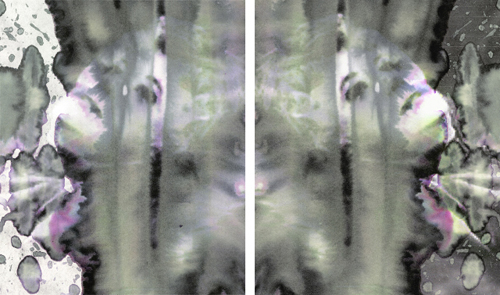
Mariah Roberston’s unique photographs are the result of darkroom experimentation and celebrate the element of chance. The resulting images are a vigorous mix of representation and abstraction. “The outcome doesn’t matter as much as the inquiry; this isn’t abstraction it’s exploration,” (Mariah Robertson, 2009). Her work has been seen in New York at a recent group show at Sikkema Jenkins as well as solo shows at Museum 52 and Guild & Greyshkul. Her work is in the collections of the Museum of Modern Art and the Los Angeles County Museum of Art.
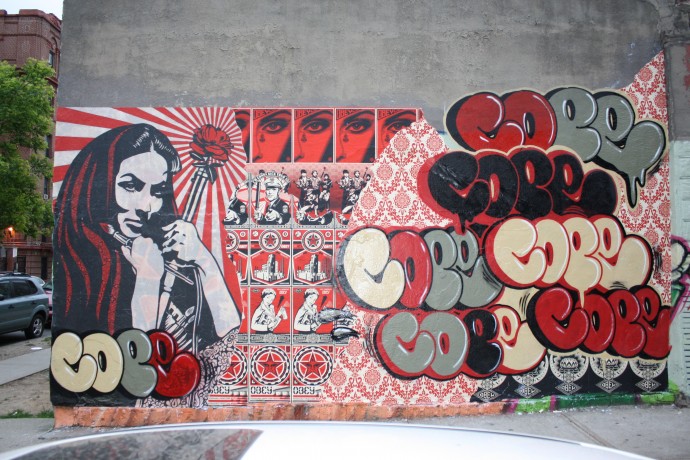
Cope 2 & Shepard Fairey ///
Andrew Sendor // Thin Skinned.:::..
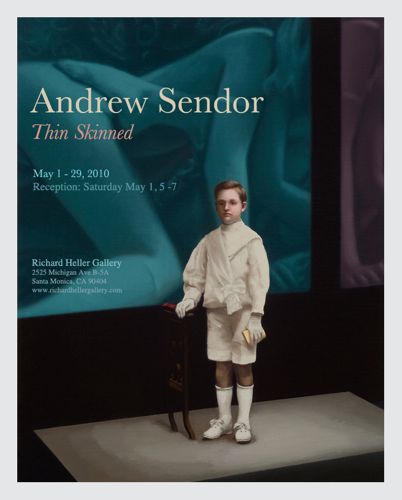
Richard Heller Gallery is pleased to present Thin Skinned, Andrew Sendor’s first exhibition with the
gallery, and his solo debut on the west coast of the United States. For the past six years, Sendor has been
deeply involved with a painting practice that investigates both the potential and the limitations of
representational painting. While Sendor’s paintings have evolved both materially and conceptually, the
motivation behind the work has always been characterized by a profound fascination in how ideas and
images are mediated through the language of painting.
This recent body of work, which Sendor created in Madrid, Spain, where he currently lives, is a
progression of uncanny hypothetical situations presented in the form of intimately sized, highly skilled oil
paintings. Sendor intelligently navigates his way through a web of delicate topics, such as the tenuous
boundaries between the sacred and the profane, between religious faith and philosophical inquiry, all
within a pictorial space that is clearly his own.
Thin Skinned features paintings that portray videos, photographs, paintings, sculptures, and, absurdly,
human-beings-as-art within the walls of museum and gallery spaces. This unexpected contextualization of
the figure, mysteriously frozen in a taxidermy form on pedestals, at once adopts a monumental status and
undermines accepted notions about what Art is, or what Art can be. While the depicted characters are
ostensibly functioning as the subjects, it is the setting in which they are found, in and amongst
appropriated artworks, that generates the questions embedded in Sendor’s ambitious painting project.
Exploring the role of the painter becomes a multifaceted endeavor for Sendor as he straddles the
vernaculars of historical genres and contemporaneous methodologies in painting, from nineteenth-century
portraiture to photorealism. As Jasper Sharp eloquently states, “Sendor does not set out with the express
intent to revise painting. Rather, with an educated consciousness of the work of his predecessors and the
debates that have swirled around contemporary art in recent years, he formulates his own visual language
and with it a distinctly personal sensibility.”