Tag: Anhava
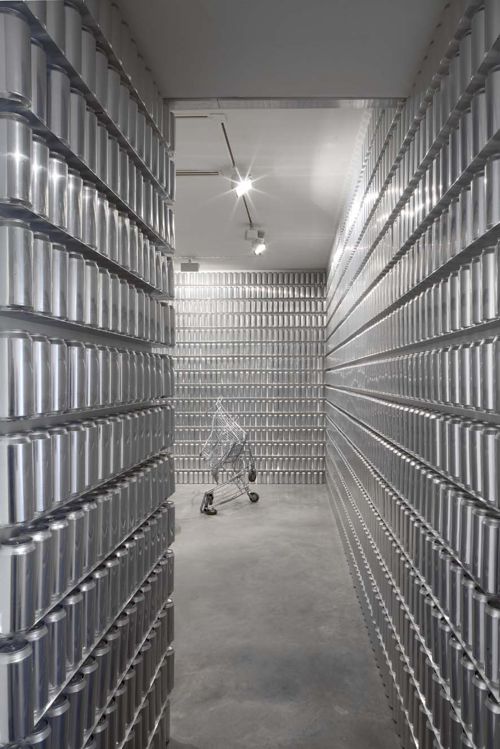
TIMO HEINO/PROJECT ROOM – Addiction Installation
JANI HÄNNINEN // “Full Circle”
ELINA MERENMIES
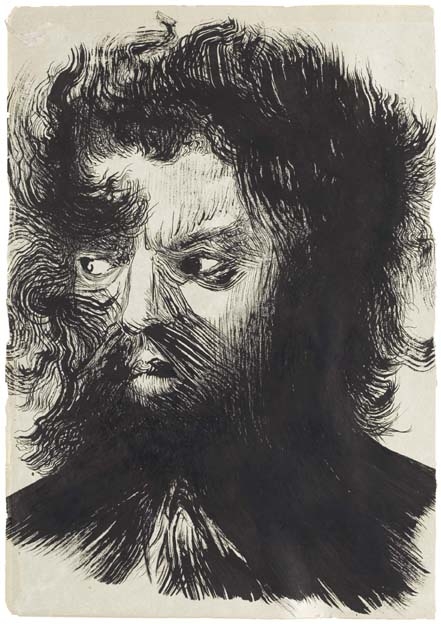
Elina Merenmies (born 1967) is one of the most
original and talented artists I have ever met.
Her works create a world of their own that is
simultaneously familiar and true while strange and wonderful.
Elina Merenmies’s new ink paintings are so fine
that the mere thought of them gives one shivers.
While the subjects are similar to those of her
previous works – forests, abstract sets of lines
taking shape to resemble something figurative;
figures often disfigured and strange yet
comforting and extremely beautiful – the new
works show even more clearly that this artist
understands people, life and the world, and has
the ability to give the things that she
understands visible and artistically deep form.
We are also treated to new oil tempera works
after a long while. They range from very small to
very large paintings, with themes from sentient
forests to human existential, perhaps even
religious, angst. They are skillfully painted
with execution ranging from washes in broad
detail to painstakingly minute work.
Elina Merenmies will next display her works in
Sweden and Denmark. In March 2010, she will have
an exhibition at the Nordic Watercolour Museum in
Skärhamn, Sweden, followed by another in the
autumn of the year at the Kristianstad Konsthall
gallery, also in Sweden, and in 2011 at
Söderjyllands Kunstmuseum in Tönder, Denmark.
In addition, Galerie Anhava will display works by
Elina Merenmies at the Armory Show in New York in March 2010.
MARKO VUOKOLA
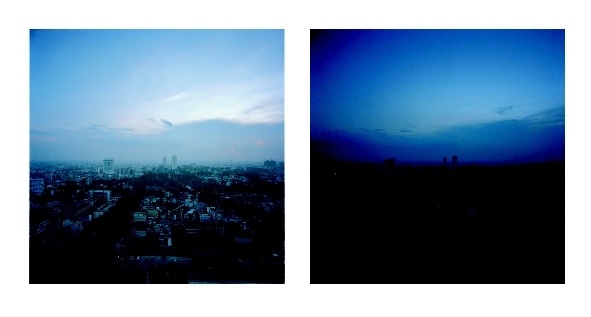
The works of The Seventh Wave are pairs of
photographs each with precisely the same cropping
and angle of view… The camera is on a tripod. I
first take one photograph, and after a while
another. I have wanted to vary the interval,
keeping it “unscientific” and even indefinite.
Anything between two seconds and six hours can
pass between the moments when the pictures were taken.
In some of the pairs, the difference can be seen
easily, while in others it is less obvious. Even
in the blink of an eye, many atoms will revolve,
a grasshopper can leap, and a glimmer of light can change place.”
This was how Marko Vuokola (born 1967) described
the works of The Seventh Wave in 2007. By that
time, the subjects of the images had ranged from
Finnish sea and lake scenes to the grounds of
Versailles, the earth and skies of Texas, and an
Audi dealership in Helsinki’s Herttoniemi suburb.
Since then, the series has been expanded with
images of paradise islands in Vietnam, an urban
landscape and the window of a Finnish apartment building.
A characteristic feature of Marko Vuokola’s work
is that he takes large numbers of pictures, which
he then sorts, selects and rejects until only one
pair, almost perfect, remains of each “theme”.
Marko Vuokola’s art is at once grand – addressing
the major basic issues of life – and restrained.
It is demanding and enduring, similar only to itself.
Since 1989, Marko Vuokola’s work has been in
dozens of exhibitions in Finland, Scandinavia,
other European countries, and in the United
States, Australia and Asia. He held his first
solo exhibition at Galerie Anhava in 1992.
ÄIVI TAKALA ”Background”
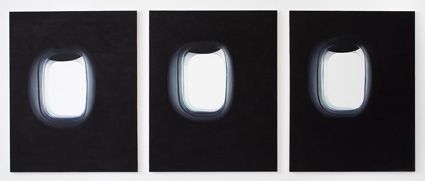
ÄIVI TAKALA
”Background”
Päivi Takala (born 1970) is fine painter, whose
previous exhibitions in Finland have aroused attention, admiration and
expectations. Her work has been on show, with
acclaim, at events such as Art Forum Berlin and the Stockholm Market Art Fair.
She now fulfils expectations with her new exhibition “Background”.
Takala’s paintings are characterized by extremely
sensitive and skilled execution, showing how her skills have
developed even further. This painter has command
of her medium and knows how to use it in an
appropriate, light and precise manner.
The artist poses questions that interest those
who are interested in painting. What is an image?
In what way is it an image? In what other
respects could it be that? Can a work of art be
simultaneously equivocal yet unequivocally a
painting? Is the absence of a subject in fact as
significant, as much a subject, as its presence?
Can a painting be completely figurative yet
completely abstract at the same time? How is
such a painting made?
Päivi Takala’s paintings are at once fast and
slow. They are interesting already at first sight
and they have an allure attracting the viewer
to look longer at them. Over a long period of
time they are filled, not emptied.