Tag: 2010
Categorization
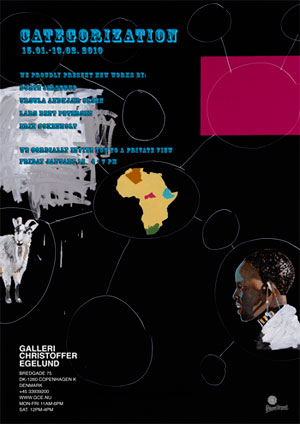
Galleri Christoffer Egelund is proud to present the group exhibition Categorization where four Danish artists are presented: Dorte Jelstrup, Erik Øckenholt, Lars Bent Petersen and Ursula Andkjær Olsen. With their unique individual style, they each contribute to a varied and thought-provoking exhibition. Hence, visitors can experience everything from montage and drawing to painting, sculpture and poetry.
The exhibition Categorization focuses on these years’ enhanced trend of categorizing and segmenting everything and everybody. In this context, we could say that the four artists question especially the type of categorization that generalizes and trivializes our concept of human beings and life – something that an increasingly simplified news stream holds a substantial responsibility for. Thus many of the works engage in different kinds of representation criticism. In other words, the goal of the exhibition is not to contribute towards increased categorization, but on the contrary to question the kind of outlook that stems from this simplified trend towards categorization. Via the exhibition, the visitor is confronted with new and unexpected questions which challenge the spectator to take a more reflexive approach to our existence in the world, and hence to a potentially more sensitive approach to human life.
Dorte Jelstrup (b. 1964) has exhibited widely inside and outside Denmark and is represented in, for instance, the collections of the National Gallery of Denmark, the Museum of Southern Jutland and the National Gallery in Prague (Czechia). Erik Øckenholt (b. 1961) graduated from the Royal Danish Academy of Fine Arts (1982-88) and subsequently the School of Visual Arts and Art Presentation (1989-91). He is represented in, for instance, the National Gallery of Denmark and Vejle Museum of Art. Lars Bent Petersen (b. 1964), who graduated from the Royal Danish Academy of Fine Arts (1985-92), attracted attention with the solo exhibition Dreams, Lies and Other Works that was awarded a prize by the Danish Arts Foundation, at Overgaden – Institute of Contemporary Art. Moreover, he is represented in the Kastrupgaard Collection and at Esbjerg Museum of Art. Ursula Andkjær Olsen (b. 1970) graduated from Copenhagen University as Master of Arts in Musicology and Philosophy and from the Authors’ School (1997-99). She has recently published Havet er en scene (The Sea is a Scene) (Gyldendal 2008), which was, amongst other things, nominated for the Nordic Council Literature Prize, and awarded a prize by the Danish Arts Foundation.
Copenhagen Graffiti (trains)
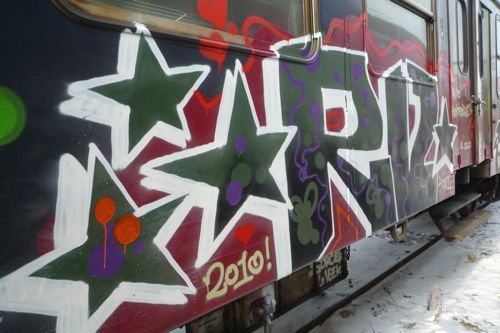

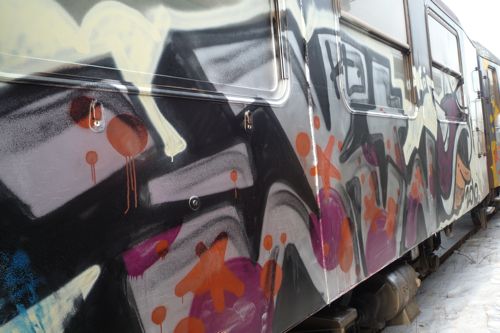
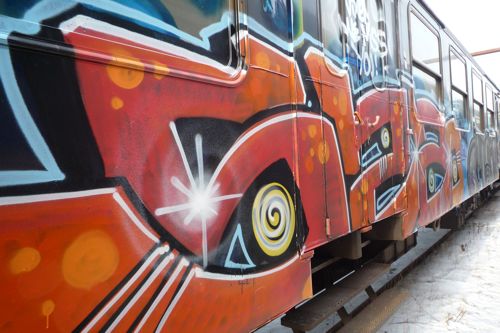
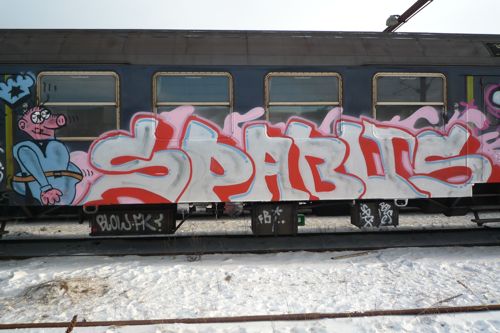
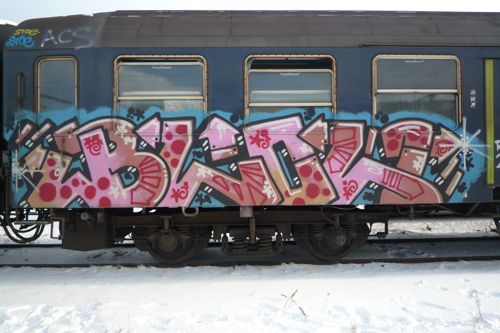
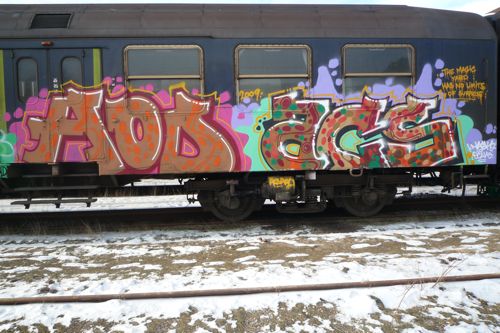
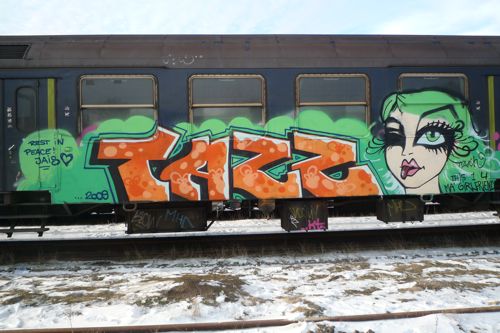
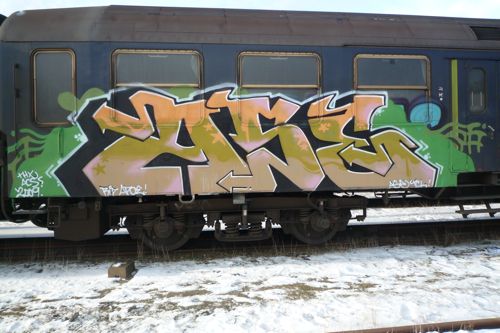
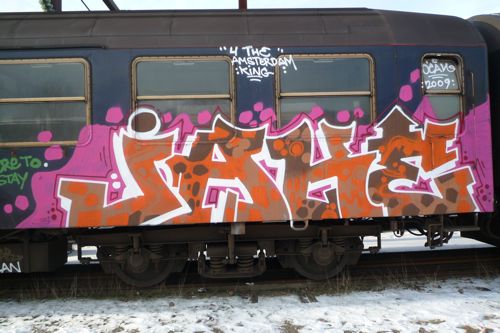
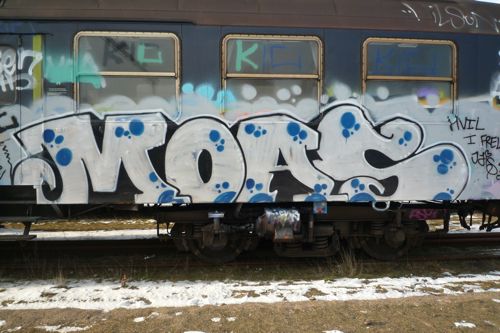
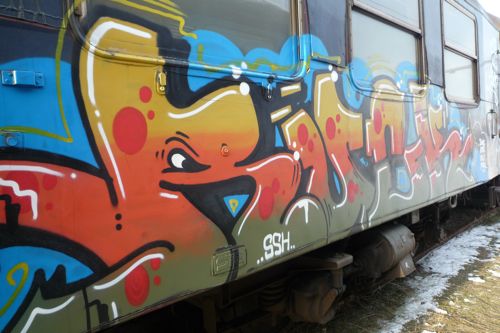
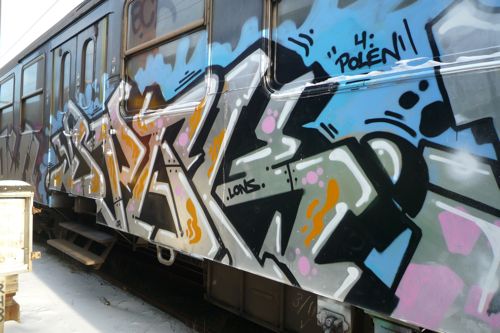
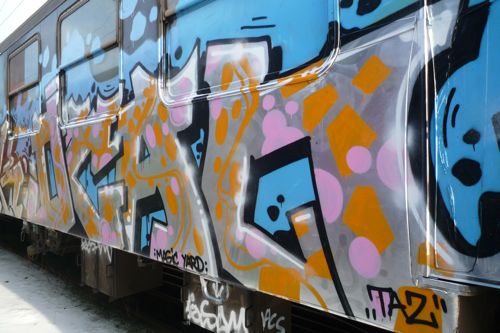
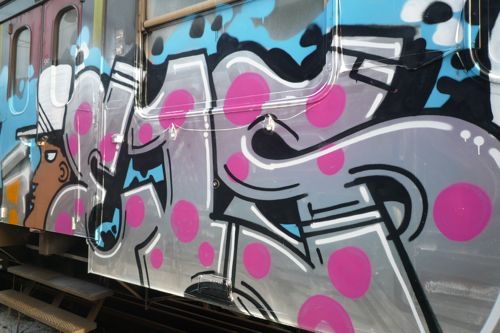
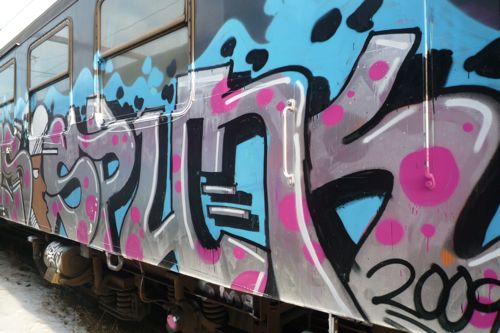
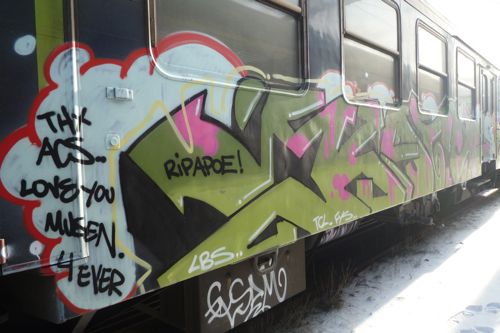
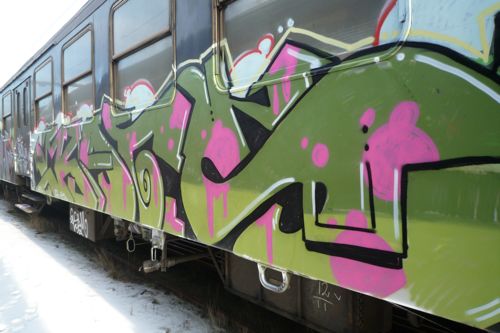
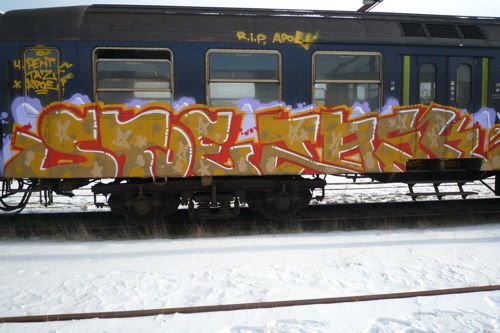
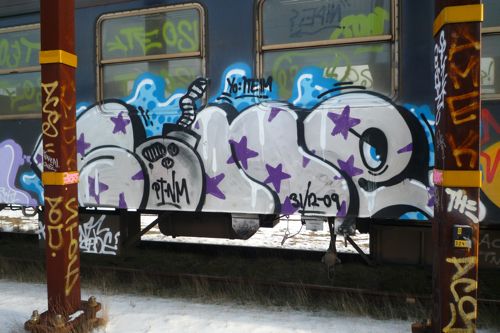
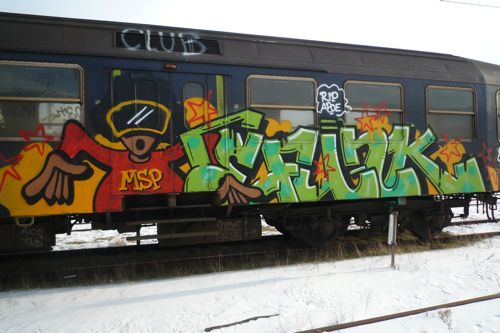
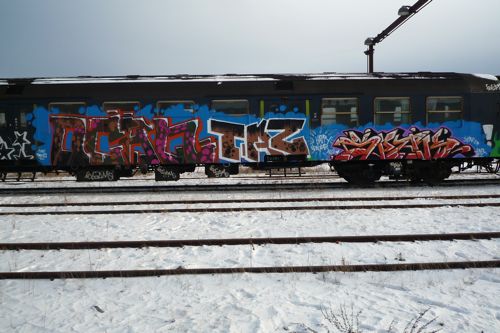
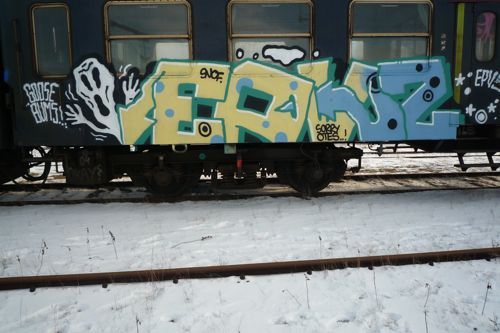
New/old but still trains….
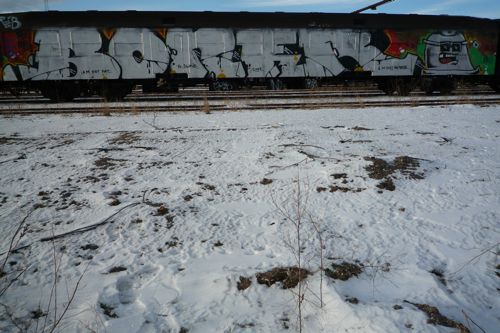
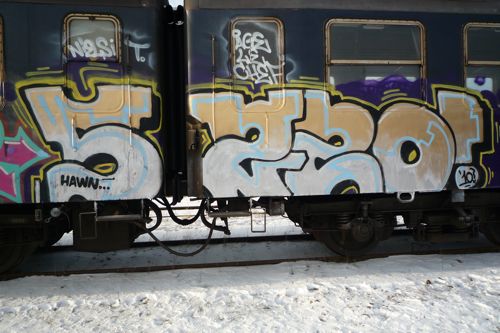
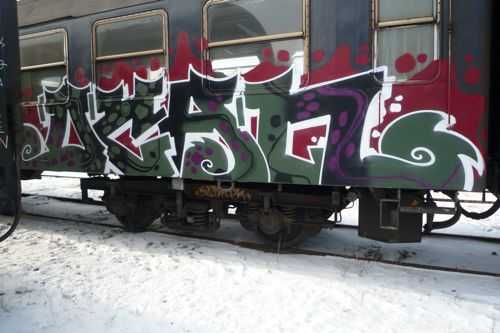
Portraits of Graffiti writers
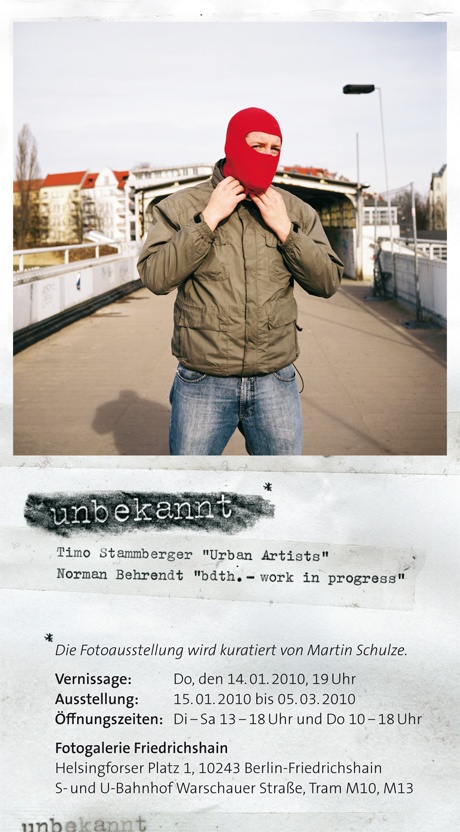
We are happy to present “Unbekannt“, an exhibition showing works of the photographers Timo Stammberger and Norman Behrendt at the non-commercial art space Fotogalerie Friedrichshain.
“Graffiti writers and other urban artists who work in public space, significantly influence the appearance of many cities and especially that of Berlin. In the exhibition “Unbekannt” (”Unknown”) the two Berlin based photographers Norman Behrendt and Timo Stammberger show portraits of some protagonists of these often difficult to access scenes. These people are often not perceived as artists, pursued by the police, and receive recognition only within their scene. But why do they follow an enormous pressure to perform, oppose the rules, and invest their money, time and energy into their art, with the risk of getting arrested? In “Unbekannt” the displayed artists are neither glorified nor condemned. Rather, Behrendt and Stammberger show intimate view of those, whose image is often distorted by the media.”
Pamela Brandt
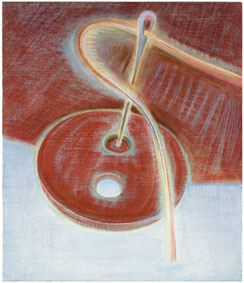
Pamela Brandt is an artist whose work is
difficult to classify and describe briefly.
She is a kind of Hilma af Klint of Finnish art,
strange and independent in her own time, or an
exotic plant of which we really don’t know what
kind of soil it needs, or a tool best suited to
its purpose but requiring insight as to its use.
Her works often proceed from an occurrence in
everyday life or an object that has prompted an
association, emotional state or comprehension
that is then transformed into an image. We
recognize everyday subjects, but Brandt never
approaches them naturalistically. They are “true”
only at the level of art, where their truth obtains.
Pamela Brandt’s paintings contain symbolism,
which, however, is never trite or self-evident,
offering instead various interpretations and
being accessible only to an open mind. Brandt
paints slowly. Each painting has undergone many
metamorphoses before achieving a state in which
the literary, intellectual and physical reality
of the work manages to merge in precisely the
manner sought by the artist. One can, and should,
look at them for a long while.
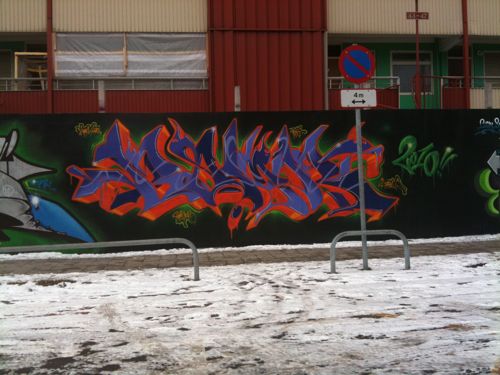
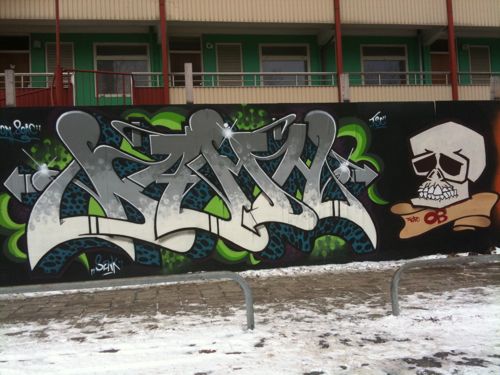
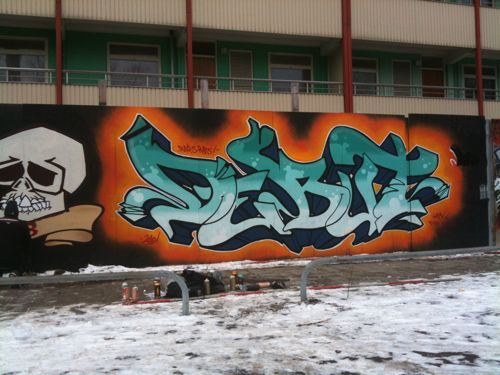
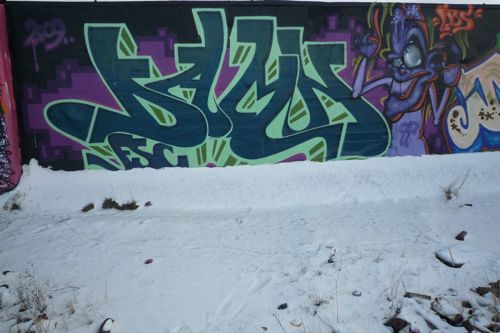
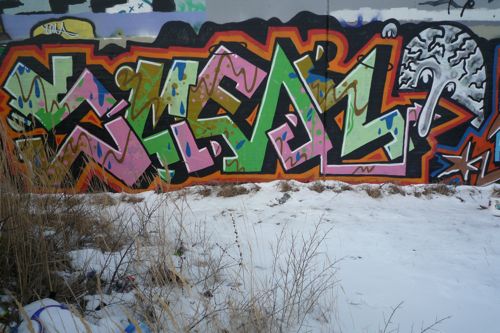
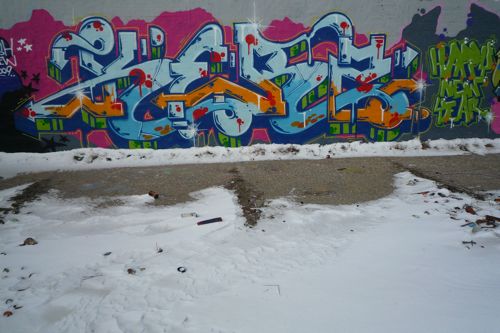
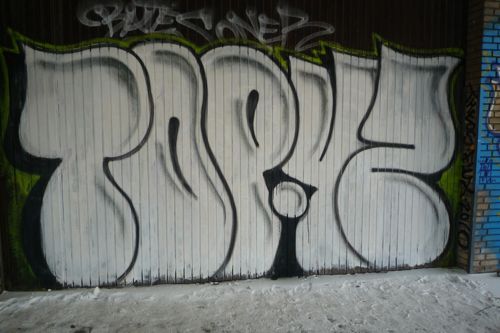
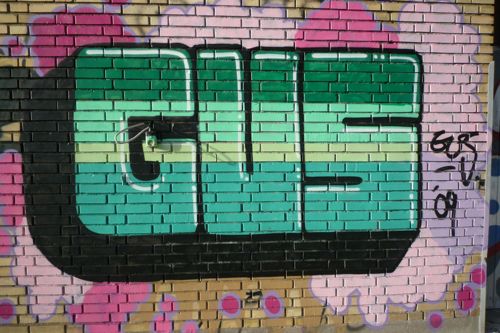
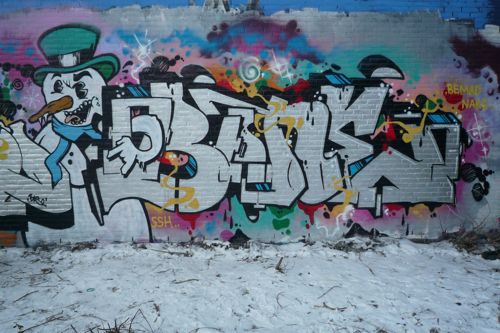
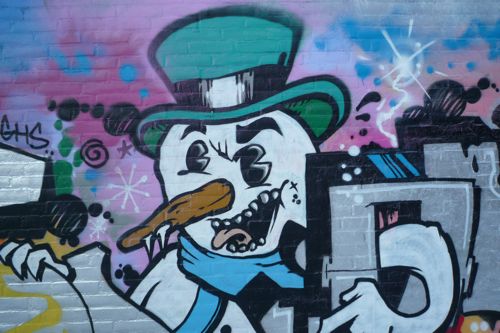
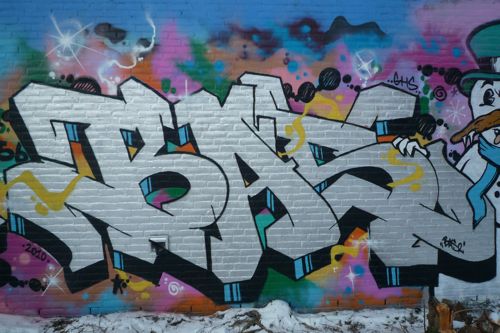
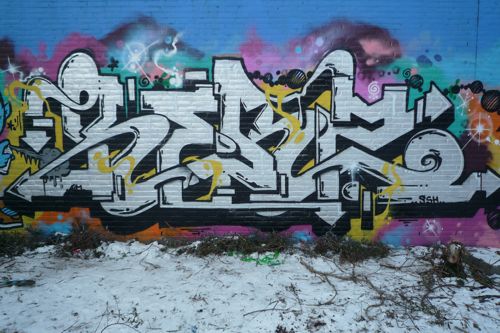
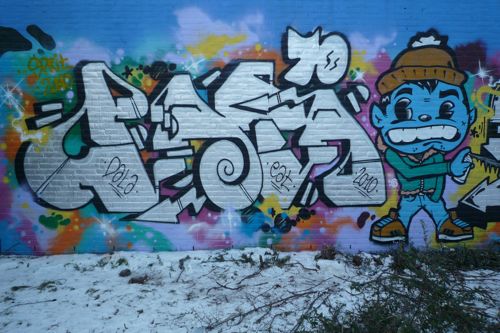
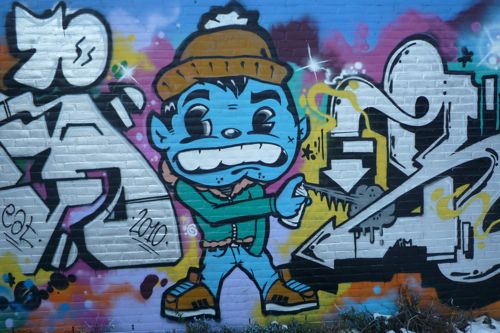
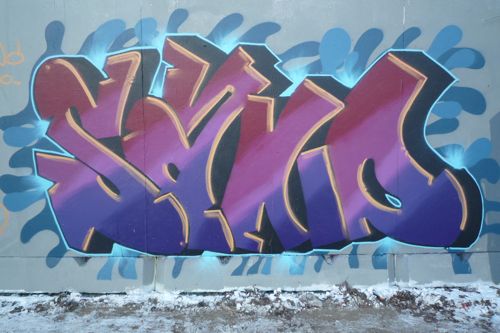
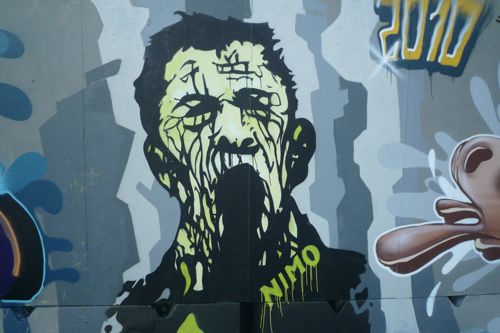
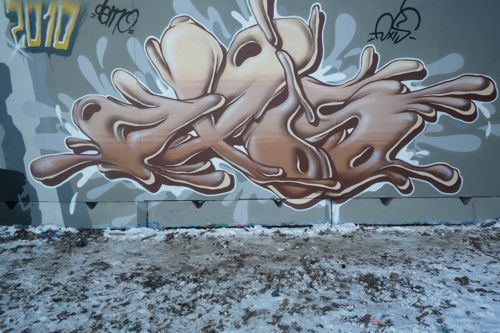
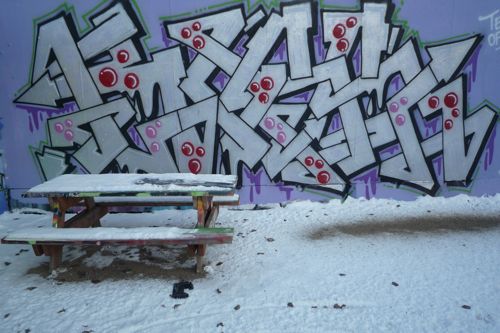
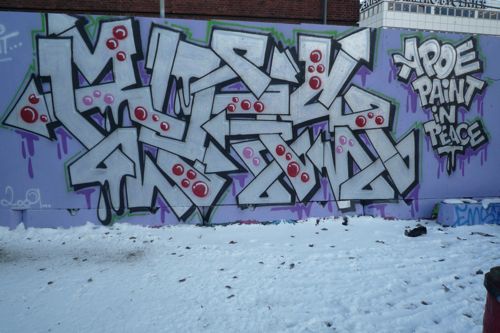
Copenhagen Graffiti
New stuff & some old stuff (End of 2009)

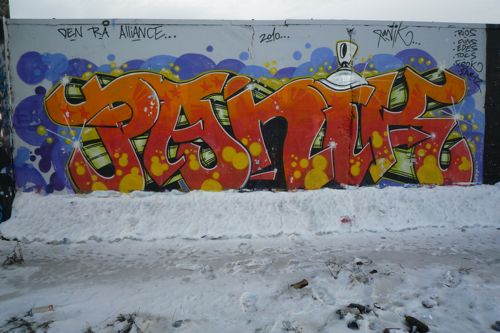
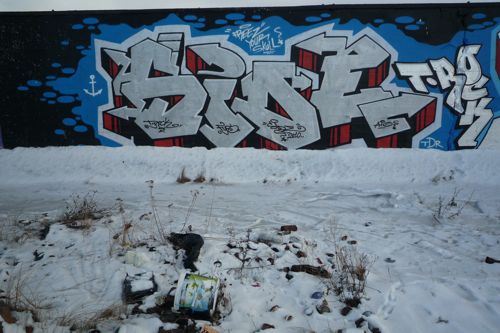
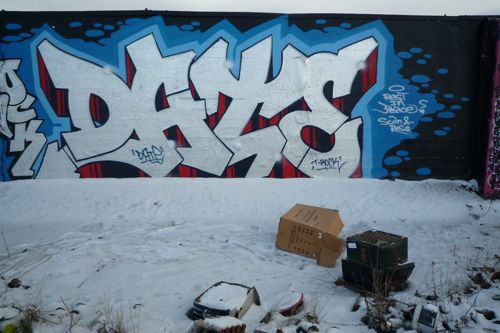
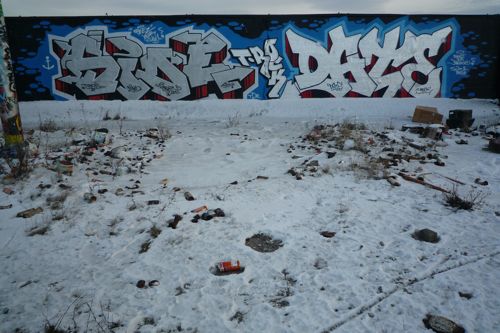
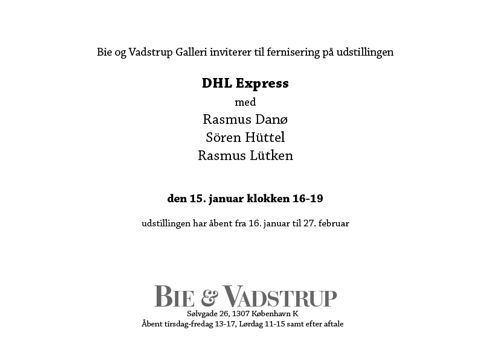
DHL Express

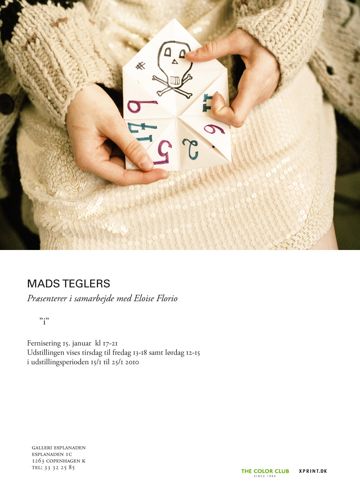
Mads Teglers
The Rise and Fall of Excess Culture
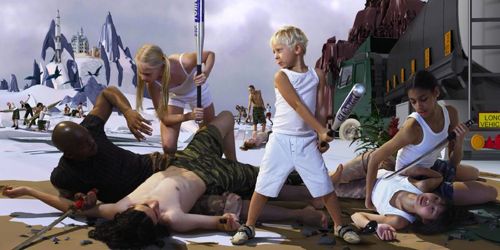
The current economic crisis, its consequences and the mediation for the salvation of capitalism is giving a “fake feeling that capitalism has failed and that it will be replaced by a new social form more concerned with justice.” Behind this false hope, capitalism is just changing its face, masking its exploitative nature and inventing new forms of oppression, updating itself for the 21st century. This is the point of departure of the show that brings together disparate art practices by artists in different media who thematize the short-circuiting flow of capital. To organize this show in the site of a commercial gallery is to emphasize the importance of the status of politics of aesthetics today. The question can be raised as following: is art capable to intercept this closed circle or not? The idea is not to simply chart the rise and fall of excess culture but to address the modes of production in late capitalism in relation to artistic production and consumption that brings to the series of busts and booms in the art markets.
Acknowledging radical critical thinking today that researches and addresses the contemporary role of capital in (de)regulating all social processes, this exhibition has a goal to provide a (partial) insight into critical interventions in the structure of contemporary capitalist societies, aiming at shedding light to commodification of art. Art in this show does not only depict excess but points to paths away from the spectacular to the realm of “slight offense,” or “minimal radicality.” This is where, at the beginning of a new decade, the place of subversion lies.
Mathieu Matégot
Mathieu Matégot
Johann König, Berlin is proud to present a selection of pieces by Mathieu Matégot. The exhibition takes place during the gallery exchange Berlin-Paris and results from the collaboration with jousse entreprise, Paris.
Mathieu Matégot is undoubtedly a forerunner of contemporary design. His involvement in innovative techniques and original forms makes him one of the more special figures of the 1950s, stamping his imprimatur on French style in that fertile post-war period.
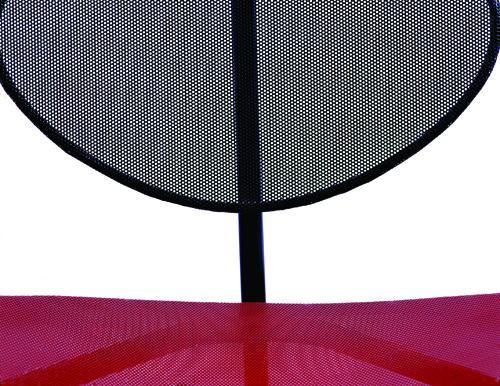
In the 1940s, and quite off the cuff, he introduced the notion of creation and aestheticism into the making of humdrum objects, with a particular fondness for rattan and metal. He lent these objects a one-off form, which made them all identifiable. His brilliance lay in the fact that, before anyone else, and from 1945 onward, he used perforated sheet metal in a quite novel way. This was a material he had discovered during his captivity in Germany. By inventing a new technique, he created a new matter. First, he perforated the sheet metal in a conventional way with clover designs, then with small square and round holes. In 1952, he christened this pierced grid-like network, which was usually painted black, with the pretty and evocative name of “rigitulle”. He developed a machine that could bend, fold and fashion sheet metal like a piece of fabric, which, in turn, gave him a great deal of freedom of expression (cf. the “Java“, “Soumba“, “Bagdad“, “Satellite“ series, etc…). And his creativity did not stop with the way he used metal: he also made use of rattan, brass, Formica, glass (sometimes engraved), different species of wood, as well as fabric and leather, in an infinite number of variants.
For the other distinctive thing about Mathieu Matégot resides in the amazing production of small pieces of furniture and everyday objects, somewhat old-fashioned but always delightful, for which he managed to invent “modern” forms and lines (trays, wastepaper-baskets, magazine racks, glass holders, flower-pot holders, occasional tables etc..). These pieces were exhibited at major fairs and shows (Salon des Art Ménagers, Salon des Artistes Décorateurs, Arts de la Table), then distributed in editions of 200, on an exclusive basis, to decoration shops.
But it was in the most important models – lamps and lights, seating, tables – made for cata€logues and commissions, in very limited editions of 6-8 – that Mathieu Matégot’s talent really had free rein. Pieces with more finished structures, at once powerful and using curves, with clean, airy lines, among which we find the masterpieces which still act as references half a century later – like the three – legged “Nagasaki” chair, the “Copacabana” armchair with its curved metallic structure, and the “Santiago” armchair (with the seat and back made of parallel strips in perfo€rated sheet metal).
Born in 1910 in Hungary, but of French nationality, Mathieu Matégot was an officer of the Order of the Arts and Letters. He had started as a decorator of the theatre, but in 1939 he developed an interest in tapestry. In 1949 he designs numerous pieces of furniture in perforated metal. Matégot launches himself in a career as decorator and furniture designer. In the 60’s he accepted a post of professor of art at the prestigious l’Ecole des Beaux Arts at Nancy. Mathieu Matégot ended his life in February, 2001 at Angers, France. He was 90 years old.